Showing posts with label Jane Austen. Show all posts

Sunday, 28 February 2021

Jane Austen Made Me Do It

 It's my pleasure to welcome Zoe Wheddon, with a charming tale of Jane Austen's best friend.

---oOo---

‘Jane Austen made me do it’ is a refrain that we may have heard before, but in my case, it really is true. In the summer of 2017, the bi-centenary year of Jane Austen’s death, book benches designed and painted by local artists were dotted around my Hampshire home as part of an art trail that encircled various places where Jane Austen had once walked before us. Amongst other things following the map to each bench spawned a reading frenzy about our beloved authoress, the like of which I had never embarked upon before. Why had I never made the most of the opportunity to find out more about our local heroine in the past? I could not answer, but I read every biography I could get my hands on.  

With the end of the Summer would come the end of my obsession – or so I thought, but instead I fell headfirst down a very beautiful rabbit hole as I stumbled upon the chance to volunteer both at Jane Austen’s House and ‘the Great House,’ Chawton House. It was as I spent time in these beautiful places the following Spring, the words of talented biographers weaving their way through my mind and mingling with the images and objects of her affection all around me, that a thought struck me. I will not forget that moment (one that anyone who has ever followed a creative impulse will recognise.) A question loomed in on me...who is this Martha Lloyd? She flitted in and out of my peripheral vision, almost like a ghost, her name would sometimes appear and then disappear, there were whispers of her on the wind here and there – who really was she and why, if she had spent so many years living with Jane, had no-one said anything about her before? My feelings began to stir and I realised I felt more than a little passionate about this, ‘If Jane had been married you can bet your bottom dollar, we would know about it’ I quietly ranted in my head, thinking of the many films and tv series that this would have inspired over the years. Yet this friend, who apparently cooked for Jane and lived in a little room just along the upstairs landing from her bedroom was barely ever mentioned. The thought would not shift, I began to turn it over and over in my mind, I had to find out more. So, I began and it was as if Jane was nodding at me now, encouraging me along to find out more, she wanted Martha to be talked about too.

Why would Jane want the world introduced to Martha I wondered? Could it be that her story was so unique that Jane wanted it shared? Perhaps. Was it that she had inspired one of the characters in Jane’s novels? Possibly. Slowly but surely, it dawned on me it was about the uniqueness of their friendship, a friendship that had been so very important to Jane - Jane the person as well as perhaps Jane the novelist. I realised that I wanted to tell this story more than anything, because Martha knew Jane as only a best friend can, just as Henry knew her as only a brother could and James Edward as only a nephew could. This, this was a completely different perspective, one with more meaning and interest to Jane’s followers than a male relative’s view of her, one that would reveal more of the person that Cassandra so touchingly depicted in her own eulogy letter to her niece. Here was a way for us to peep behind the curtain into Jane’s homelife and see her as another young woman might have seen her. This was too special an opportunity to pass by, too rare a glimpse not to be sought after with every effort and using every possible source available. This was a dream come true – the dream of everyone who has ever read a Jane Austen novel or seen an adaptation and wished with all their heart that they could carry on the conversation with the author herself. This was surely a narrative for our time, and with the resurgence of the female voice through campaigns such as the #MeToo movement it seemed even more important, more relevant than ever, that we should seek a clearer picture of Jane Austen the woman. For in doing so we might not only indulge our dreams of being Jane’s friend but also reveal a more authentic view of Jane and thus with it a deeper understanding of her messages to us in her novels. 

The book written, I took a trip to Jane and Martha’s Chawton home and sat on the beautifully carved commemorative stone bench. I imagined them both coming and sitting with me as we gazed out upon verdure. I felt truly grateful for the many hands of friendship offered to me throughout the research and writing journey, especially to Catherine the very first to reach out and encourage me.  ‘Friendship is certainly the finest balm’ not just for ‘disappointments in love’ as Jane pointed out, but also for our hopes and dreams, those really quiet ones that we perhaps flick away like flies or that lay hidden deep within our hearts. Learning about Jane and Martha’s friendship taught me to have faith in my own creativity. It unearthed the realisation that I, as we all do, have a contribution to make to life through love and connection with others. 

Hidden in Jane Austen’s Best Friend: The Life and Influence of Martha Lloyd there is a challenge implicitly issued to every reader - what would Jane have YOU do? In writing this book I have found she would have you be your truest and fullest self, to find a way to bring your dreams into the light, and to give your own ‘darling child’ a lease of life. She would encourage you to let the spark catch, to start where you are, to find your own small group of supporters and to begin to carve out moments, to mould your time to do your bidding. She would acknowledge that you need to dredge up the gumption and put in the hard work even though that work be difficult or imperfect because in letting forth this fountain, this force, you will know, as Jane did, the thrill that only the expression of yourself can bring and you will, in that moment, know how to value yourself as you should. 

---oOo---

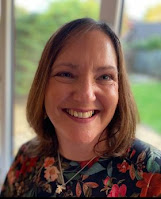
A native of Jane Austen's beloved county of Hampshire, Zoe lives in a North Hampshire village, on the outskirts of the town that she and her husband Matt both grew up in, with their 3 grown up children and their cat Leia. When she is not researching or writing, Zoe can be found in the classroom teaching Spanish and French or singing ABBA songs loudly in her kitchen.

JANE AUSTEN'S BEST FRIEND: THE LIFE AND INFLUENCE OF MARTHA LLOYD is a heart-warming examination of the 'recipe for friendship' between Jane Austen, (with whom all Janeites are best friends in their imaginations,) and Martha Lloyd. In looking back somewhat longingly at Martha and Jane's strong and enduring bond we can examine all their interests, including the hits and misses of their romantic love lives, their passion for shopping and fashion, their family histories, their lucky breaks and their girly chats.

Through an examination of the defining moments of their shared lives together, the book gives readers an insight into the inner circle of the famously enigmatic and private authoress and the life changing force of their friendship.


Monday, 13 January 2020

Being Mr Wickham: New Dates Added


I'm thrilled to announce that booking for Being Mr Wickham, starring Adrian Lukis, is now open at for three additional dates. There are also still a very limited number of tickets available for the show's two-night run in Bath next week. We hope to see you there!

Oundle Literature Festival, 14th March Click here to book 
Huddersfield Literature Festival, 21st March Click here to book (includes Q&A)
The Haymarket, Basingstoke, 1st July Click here to book (includes Q&A)

Written off as a rake and reviled as a rogue, join George Wickham on the eve of his sixtieth birthday to discover his version of some very famous literary events. From childhood games at Pemberley to a run-in with Lord Byron, via marriage to Lydia and just a little bit of matchmaking for Elizabeth Bennet and Mr Darcy, Mr Wickham is ready to set the record straight.

This brand new production by Catherine Curzon and Adrian Lukis sees Adrian return to his celebrated role as George Wickham, Jane Austen's most quintessential trouble-maker. 

Wednesday, 6 November 2019

Being Mr Wickham: New Dates Added


Adrian Lukis will star in Being Mr Wickham at the Theatre Royal, Bath, on 20th and 21st January 2020. The performance will be followed by a Q&A with Adrian and me, and tickets are available now! 

https://www.theatreroyal.org.uk/event/being-mr-wickham/


The definitive Mr Wickham lifts the sheets on exactly what Jane Austen’s most roguish gent has been up to in the last thirty years. Join George Wickham on the eve of his sixtieth birthday to discover his version of some very famous literary events.
What really happened with Darcy…?
What did he feel about Lizzie…?
What happened at Waterloo? Not to mention Byron…
Mr Wickham is ready to set the record straight.
Adrian Lukis received an Olivier Award nomination for his performance in the TRB production of The PriceCatherine Curzon is a historian, author and lover of all things 18th Century. The performance will be followed by a Q&A with Adrian and Catherine.

Tuesday, 5 November 2019

Unwed Mothers in the Regency by Colin Odom

It's a pleasure to welcome Colin Odom, who is visiting the salon as part of the blog tour for A Covenant of Marriage. Colin is here to share  fascinating post about the lot of unwed mothers in the Regency.

---oOo---

A Covenant of Marriage and Unwed Mothers in the Regency
C. P. Odom

During the writing of A Covenant of Marriage, I wrote a situation involving an unwed mother who, for various reasons, had no recourse to friends or family. Before I could write my way out of that dilemma, I did do a little research into just what would have happened during that particular time and whether or not the charity I postulated might have existed in reality. As shown below, unfortunately, the answer is a tentative Maybe.
In the time of the Regency, society was essentially based on marriage and the family, and adults had their place in that society based on their position in the family unit. Married women were held in higher esteem than unmarried women, and married men were given the respect due to someone who had proven their capability to support a family. Women were identified for tax purposes as either wives, widow, or spinsters, while men were identified by their occupation or social status.
Spinsterhood was a definite liability for a woman, even for an upper class girl (though almost a fourth of such girls remained unmarried). If a single woman had an independent income sufficient for her to support a household, she was able to carry on an independent life. If not, a spinster would be faced with the choice of somehow finding employment suitable to her genteel status or else would have to live in the house of a relative. If a single woman possessed independent means—a fortune of her own sufficient for her to live on, it was possible she could maintain her own household and carry on an independent life.
However, the above situations offered far better prospects than did a young woman who became pregnant without benefit of marriage. In the best of cases, the unfortunate young lady’s family might be able to force the responsible young man to marry their daughter. But this solution depended on money and secrecy to make it work, since neither the bride or the groom could withstand the shame if their situation became openly known. And, if the man later proved incapable of supporting his dependents, this might be described as a case of jumping out of the frying pan into the fire.
But many such women were not able to manage such a marriage. Filled with shame at their condition, they and their families often looked for places in which they could be hidden away during their pregnancy. While investigating this situation, I was quite surprised to find that some places advertised themselves in newspapers offering discreet refuge away from the public view. After the mother gave birth, many unwanted children were left on church steps and porches, assuring that the parish would provide care and sustenance for these abandoned orphans. Again, secrecy and money were necessary requirements in making such solutions work.
Less fortunate were those unwed mothers who left their homes, perhaps to keep their family from suffering for her disgrace or because they simply could not bear to openly admit their condition to parents and/or siblings. Many such pregnant women, unable to support themselves, were soon hungry, exhausted, and in poor health and found themselves forced to enter a workhouse, the last retreat for those at the end of their tethers. Some abandoned babies, such as Charles Dickens character in Oliver Twist, also wound up in such a workplace, having been born after his unwed mother died bringing him into the world. The conditions were appalling, and even pregnant women awaiting the birth of their child were expected to work. Many women, like Oliver Twist’s mother, were simply too weak after birth to survive, leaving their unwanted babies as orphans.
But to get back to my novel and the reason for this research, I had come up with the idea of a charity providing a refuge for unwed mothers in a more open environment in London, and I wanted to see if such charities had actually existed. Unfortunately, all I could really uncover was that the first maternity homes were set up to provide shelter for expectant or nursing mothers. However, a very famous institution titled London’s Foundling Hospital was opened in 1741 by an old sea-captain named Thomas Coram who had become a wealthy shipwright and merchant following his time commanding merchant ships. During his travels to and from London on business, Coram had been shocked by the sight of the many unwanted children that tried to find what shelter and sustenance they could. Even if they were found, many of them died from hunger or disease because they were not found in time. He founded his hospital, which is believed to be the world’s first incorporated charity, as a way to take in unwanted children and care for them until they could fend for themselves. The Hospital opened their doors to illegitimate children in 1801.
So, despite the dearth of historical data to validate my invention of a charitable institutions such as “The Bedford Charitable Home for the Unfortunate” in my novel, I still believe such institutions likely existed. The absence of definitive historical documentation could well be the difference in size between my fanciful charity, with only a few dozen beds and perhaps one or two midwives and the large Foundling Hospital. The latter institution was substantial in size, enough so that Charles Dickens and his family worshiped in the Foundling Chapel. Certainly, there was a critical need for such charities, and the less wholesome (and less documented) parts of London could have included such small institutions, many of which might only have lasted for a few years until the founder exhausted his funds and they were forced to close their doors.
In summary, this author asks for a little suspension of disbelief in this matter due to lack of evidence either way. No matter how much internet research one does, a “WayBack Machine”such as in the Rocky and Bullwinkle cartoon shows of my childhood would be needed, and I’m fresh out.

---oOo---

A Covenant of Marriage — legally binding, even for an unwilling bride!
Defined as a formal, solemn, and binding agreement or compact, a covenant is commonly used with regard to relations among nations or as part of a contract. But it can also apply to a marriage as Elizabeth Bennet learns when her father binds her in marriage to a man she dislikes. Against her protests that she cannot be bound against her will, the lady is informed that she lives under her father’s roof and, consequently, is under his control; she is a mere pawn in the proceedings.
With such an inauspicious beginning, how can two people so joined ever make a life together?


Author Bio: 
 By training, I’m a retired engineer, born in Texas, raised in Oklahoma, and graduated from the University of Oklahoma. Sandwiched in there was a stint in the  Marines, and I’ve lived in Arizona since 1977, working first for Motorola and then General Dynamics. 
I raised two sons with my first wife, Margaret, before her untimely death from cancer, and my second wife, Jeanine, and I adopted two girls from China. The older of my daughters recently graduated with an engineering degree and is working in Phoenix, and the younger girl is heading toward a nursing degree. 
I’ve always been a voracious reader and collector of books, and my favorite genres are science fiction, historical fiction, histories, and, in recent years, reading (and later writing) Jane Austen romantic fiction. This late-developing interest was indirectly stimulated when I read my late wife's beloved Jane Austen books after her passing.  One thing led to another, and I now have four novels published:  Most Civil Proposal(2013), Consequences(2014), Pride, Prejudice, and Secrets(2015), and Perilous Siege(2019). Two of my books are now audiobooks, Most Civil Proposaland Pride, Prejudice, and Secrets
I retired from engineering in 2011, but I still live in Arizona with my family, a pair of dogs (one of which is stubbornly untrainable), and a pair of rather strange cats.  My hobbies are reading, woodworking, and watching college football and LPGA golf (the girls are much nicer than the guys, as well as being fiendishly good putters). Lately I’ve reverted back to my younger years and have taken up building plastic model aircraft and ships (when I can find the time).


Contact Info:

Buy Links:   
Amazon USeBook, Paperback, Kindle Unlimited
Amazon UKeBook, Paperback, Kindle Unlimited

Blog Tour Schedule:

Giveaway:
Meryton Press is giving away 8 eBooks of A Covenant of Marriage via the link blow!

Tuesday, 29 October 2019

The Bride of Northanger – and Netley Abbey

It's a pleasure to welcome Diane Birchall, with a look behind the inspiration for a literary location!


--oOo---


As an early practitioner of what is now called the Austenesque, I wrote my first piece of pastiche in 1984, winning a contest in Persuasions (the journal of JASNA), with an imitation of Miss Bates’ discursive chat in Emma.  I found this to be such a delightful pastime, I haven’t stopped yet. Hundreds of stories and a few novels later, I’ve found a lifetime study of Austen’s work to be a resoundingly entertaining education. Examining Austen’s methods and her witty and elegant style with the object of improving my own, led to an ever deepening appreciation of her uniquely re-readable novels.
Why, then, did it take such a long time for me to come around to a real consideration of Northanger Abbey? An early work, though one she revised later, it has enormous charm and humor, though perhaps not the same weight of thought and workmanship as her more mature works. Northanger Abbey satirizes the Gothic genre, the “horrid novels” read for thrills by its young heroine Catherine Morland and her more experienced friend Isabella Thorpe. Jane Austen also seized a revealing chance to air her own opinions about novels and novel-writing. However, it was not so much the Gothic literary playfulness that I found most appealing about Northanger Abbey: it was the central relationship, which was a puzzling one to me.  I never quite understood why or how an unusually clever man like the captivating Henry Tilney could fall in love with such a young, naïve, uneducated girl as Catherine. This was something I wanted to explore, psychologically, realistically, and romantically. 
After some consideration of Henry’s father, General Tilney, I realized that Henry had been fairly bullied and brutalized by this dreadful man, and that a girl like Catherine, with her refreshing honesty and lack of guile, was therefore very appealing to him. 
A sequel to Northanger Abbey, my novel The Bride of Northanger contains plenty of Gothic adventuring.  Austen enjoyed the genre herself, and I duly read several of the books Catherine and Isabella pored over, full of incidents of the sort that Henry Tilney memorably said made the hair on his head stand up on end. These episodes were fun to research and to invent; but I never wanted to stray too far away from Henry and Catherine themselves, and how their own love story might have progressed. Their engagement we know lasted a year, during which time they corresponded; and I was sure Henry recommended plenty of good reading to his naïve young fiancée. Thus, by the time of the wedding, she had been exposed to much more thinking and education, and was consequently a better, more interesting wife for Henry. Their marriage became a more equal one than it might have seemed at the conclusion of Northanger Abbey. Certainly there were Gothic horrors for them to contend with, but Catherine, with her natural common sense and improved mind, became a most admirable heroine, in my mind at least:  a true Bride of Northanger.
In trying to find the right cover picture to represent Catherine, I needed to look no further than a portrait by the French artist Elisabeth Vigee Le Brun, of a young girl who would have been exactly the same age as Austen’s Catherine. This was Corisande Armandine Leonie Sophie de Gramont (1783 – 1865), a granddaughter of Marie Antoinette’s favorite friend the Duchesse de Polignac. Corisande married an English MP, the Earl of Tankerville, and lived in England. She was visually my Catherine to a T (or a C), but I wanted the cover to be more than a pretty girl’s head. I needed an Abbey, to represent Northanger. 
Netley Abbey by Moonlight by John Constable, 1833
The obvious choice was Netley Abbey, which Jane Austen actually visited herself while living in Southampton. Soon after her father’s death in 1805, Jane, her mother, sister Cassandra, and friend Martha Lloyd moved to Southampton, taking lodgings with sailor brother Francis’s wife Mary. Francis would be at sea, and Mary was pregnant, so the arrangement suited all parties. Jane Austen had been to Southampton earlier, as a young girl, and knew it well;  Netley Abbey, on Southampton Water, was a popular excursion. In 1808 Jane wrote to Cassandra about taking their two young nephews, who had lately lost their mother, on an outing there:
“I intend to take them to Netley today; the tide is just right for our going immediately after noonshine, but I am afraid there will be rain.” 
Portrait of John Constable as a young man, 1799
There can be little doubt that Netley Abbey, with its forbidding aspect and dramatic history, seized Jane’s imagination, as it had that of other authors and painters. The suppression of the monasteries in Henry VIII’s time may seem remote to the period in which Jane Austen wrote, but it was an historical subject that was important to her. She saw evidences of monastic buildings taken over by rich landowners for their own gain, all around her. Her depiction of General Tilney’s greedy, self-serving way of running his grand estate that had once been a religious house, reflects this. 
The Ruins of Netley Abbey, sketch by John Constable, 1826
The decorative painting I chose of Netley Abbey for my own book cover is by the English landscape painter John Constable, titled Netley Abbey by Moonlight. The painter and his wife visited Netley in 1816, on their honeymoon, though the watercolor painting was done years later. The ancient Cistercian structure, founded in 1238, has a most bloody history and has been said to be haunted by ghosts of the monks whose home was ripped from them in the confiscations. What better place to set off ghostly imaginings in almost any visitor – and to spark the imagination of genius to recreate it as Northanger Abbey. 

About the  Author

Diana Birchall worked for many years at Warner Bros studios as a story analyst, reading novels to see if they would make movies. Reading manuscripts went side by side with a restorative and sanity-preserving life in Jane Austen studies and resulted in her writing Austenesque fiction both as homage and attempted investigation of the secrets of Jane Austen's style. She is the author of In Defense of Mrs. EltonMrs. Elton in AmericaMrs. Darcy's Dilemma, and the new The Bride of Northanger. She has written hundreds of Austenesque short stories and plays, as well as a biography of her novelist grandmother, and has lectured on her books and staged play readings at places as diverse as Hollywood, Brooklyn, Montreal, Chawton House Library, Alaska, and Yale. Visit Diana at her Austen Variations author page, follow her on TwitterFacebookand Goodreads.

The Bride of Northanger
A happier heroine than Catherine Morland does not exist in England, for she is about to marry her beloved, the handsome, witty Henry Tilney. The night before the wedding, Henry reluctantly tells Catherine and her horrified parents a secret he has dreaded to share - that there is a terrible curse on his family and their home, Northanger Abbey. Henry is a clergyman, educated and rational, and after her year’s engagement Catherine is no longer the silly young girl who delighted in reading “horrid novels”; she has improved in both reading and rationality. This sensible young couple cannot believe curses are real...until a murder at the Abbey triggers events as horrid and Gothic as Jane Austen ever parodied - events that shake the young Tilneys’ certainties, but never their love for each other...


PURCHASE LINKS:


THE BRIDE OF NORTHANGER BLOG TOUR SCHEDULE:

October 28                My Jane Austen Book Club (Interview)
October 28                Austenprose—A Jane Austen Blog (Review)
October 28                vvb32 Reads (Spotlight)                            
October 29                A Covent Garden Gilflurt’s Guide of Life (Guest Blog)
October 29                From Pemberley to Milton (Excerpt)
October 30                Drunk Austen (Interview)
October 30                Silver Petticoat Review (Excerpt)
October 31                Jane Austen’s World (Review)
November 01            So Little Time… (Interview)
November 01            Laura's Reviews (Review)
November 04            English Historical Fiction Authors (Guest Blog)
November 04            Confessions of a Book Addict (Spotlight)
November 05            More Agreeably Engaged (Review)
November 05            Vesper’s Place (Review)
November 06            Jane Austen in Vermont (Interview)
November 06            Diary of an Eccentric (Interview)
November 07            All Things Austen (Spotlight)
November 07            A Bookish Way of Life (Review)
November 07            Let Them Read Books (Excerpt)  
November 08            Babblings of a Bookworm (Review)
November 08            vvb32 Reads (Review)
November 11            My Jane Austen Book Club (Review)
November 11            Reading the Past (Spotlight)
November 12            Jane Austen’s World (Interview)
November 12            The Calico Critic (Excerpt)
November 13            The Book Rat (Review) 
November 13            Austenesque Reviews (Review)
November 14            Fangs, Wands, & Fairy Dust (Review)
November 14            The Fiction Addict (Review)
November 15            My Love for Jane Austen (Spotlight)
November 15            Scuffed Slippers and Wormy Books (Review)                                   

Monday, 1 July 2019

Being Mr Wickham: On Sale Now

Booking is now open for Being Mr Wickham, starring Adrian Lukis, at Bath's Masonic Hall on 15th September! I'm so excited to have written this show, which sees Adrian return to the role of Mr Wickham as Austen's most infamous rogue looks back at his life on the eve of his 60th birthday.

Tickets are already selling fast!


Click this link to book:
https://bathboxoffice.org.uk/whatson/being-mr-wickham-premier-production/180410/

If you'd prefer to catch the show at Stamford, you can do so by clicking here:
https://www.stamfordartscentre.com/whats-on/all-shows/being-mr-wickham

"Written off as a rake and reviled as a rogue, join George Wickham on the eve of his sixtieth birthday to discover his version of some very famous literary events. From childhood games at Pemberley to a run-in with Lord Byron, via marriage to Lydia and just a little bit of matchmaking for Elizabeth Bennet and Mr Darcy, Mr Wickham is ready to set the record straight."


Monday, 10 June 2019

Being Mr Wickham

I'm thrilled to finally announce my super secret project. On 15th September Bath's fabulous Jane Austen Festival will host the premier of Being Mr Wickham, my theatrical writing debut, starring Adrian Lukis (who else!?) as Jane Austen's quintessential rogue. 

Mr Wickham may be a little older, but is he any wiser?

"Written off as a rake and reviled as a rogue, join George Wickham on the eve of his sixtieth birthday to discover his version of some very famous literary events. From childhood games at Pemberley to a run-in with Lord Byron, via marriage to Lydia and just a little bit of matchmaking for Elizabeth Bennet and Mr Darcy, Mr Wickham is ready to set the record straight."

The performance will be followed by a Q&A with Adrian and me. 

This is an absolute dream come true moment for me - I'm still pinching myself!

Tickets go on sale soon, but I couldn't keep it to myself a moment longer!

You can also catch the show as the finale to Stamford Georgian Festival on 29th September. Click here to book!