Showing posts with label Assassination. Show all posts

Tuesday, 17 June 2014

Mohammad Khan Qajar and a Fatal Taste for Melon

Mohammad Khan Qajar (Agha Muḥammad Khān Qājār; Astarabad, Persia, 1742 – Shusha, Persia, 17th June 1797)
Mohammad Khan Qajar,1820

Today we travel all the way to Persia for a tale of assassination, when two condemned men made an audacious try for freedom. Just three years after replacing his murdered father as Shah of Persia in 1794 and following a string of military victories, Agha Muhammad was also destined to die by violent means.

On the night of his death Agha Muhammad was resting in Shusha, the fearsome ruler anticipating no trouble and looking forward only to a peaceful evening. Legend has it that he ate half a melon and ordered his servants to safeguard the remainder, warning that, should they eat any themselves, they would be punished with death. As the night drew on, one of the servants grew so hungry and tempted by the fruit that he ate a segment and, in fear of Agha Muhammad's legendary wrath, killed him to escape punishment.

In fact, the truth is probably far less colourful. As Agha Muhammad retired for the night two servants, Sadeq Khan and Khodadad-e Esfahani, got into a noisy argument within the shah's earshot. So loud did the quarrel become that Agha Muhammad lost his temper and ordered that both men be executed. Despite the efforts of Sadeq Khan-e Shaghaghi, a notable emir, the shah would not be persuaded to lift the sentence and agreed only that it could be postponed for twenty four hours until after the forthcoming religious holiday.

The two condemned men were returned to their duties and with nothing to lose, decided to take matters into their own hands. With the help of fellow servant, Abbas-e Mazandarani, they stole into Agha Muhammad's chambers and stabbed him to death. Helping themselves to the shah's crown jewels, they fled for safety and Agha Muhammad passed into history.

Life in the Georgian Court, true tales of 18th century royalty, is available at the links below.

Pen and Sword
Amazon UK
Amazon US

Book Depository (free worldwide shipping)

Sunday, 11 May 2014

The Assassination of Spencer Perceval

Spencer Perceval, KC (London, 1st November 1762 – London, 11th May 1812)

Spencer Perceval by George Francis Joseph, 1816

There have been many cases of political leaders falling victim to assassination attempts whilst in office. The USA has seen its fair share and so have many other countries across the world but in England, only one Prime Minister has been felled by an assassin's attack and that somewhat questionable honour belong to Spencer Perceval. As some of you know, before I opened the salon I spent many a long year in the employ of the House of Commons and the tale of Perceval is one that our visitors always liked to hear!

Perceval had assumed the office of Prime Minister on 4th October 1809, having previously served in a number of senior governmental positions. He survived a number of political challenges and won himself the backing of the Prince Regent, but away from the House of Commons, Perceval had made a most murderous enemy.


In 1803, John Bellingham, a merchant, was working in Russia when he was maliciously accused of being a debtor. Bellingham was held in Russia for six years on a variety of charges  and only freed after he made a personal petition to the Tsar. He had spent the years since his return to England engaged in fruitless efforts to gain compensation from the British government for his incarceration, believing that his country had done little to help him win his freedom. Of course, these appeals for money were all denied and Bellingham's anger quietly, furiously, festered.


John Bellingham from The Newgate Calendar, 1812

At 5.15pm on 11th May 1812, the Prime Minister entered the Commons lobby and was confronted by Bellingham, who calmly raised a pistol and shot Perceval in the chest. The unfortunate politician collapsed to the ground whilst his assassin calmly took a seat and watched the ensuing panic. Perceval was carried from the lobby into a private room and within minutes, he had succumbed to his injuries.

Meanwhile, Bellingham, was apprehended and hurried from the scene of his crime amid fears that more trouble might be to come. In fact he was alone and was neither part of nor the leader of a revolutionary mob and within days he was on trial for his life. Bellingham was calm, considered and utterly convinced of the righteousness of his actions. His demeanour at the trial was perfectly pleasant and following a long and detailed description of his many grievances against the government  the jury retired. Within  a quarter of an hour, they decided that Bellingham was not only guilty, but of sound mind too and he was sentenced to hang.


Bellingham went to the gallows on 18th May before a crowd of onlookers who did not celebrate his execution. Viewed as a man who had fallen foul of an unjust government, the public was somewhat sympathetic to his plight and a public subscription was raised for his widow and children that raised a large sum of money for their support.

The Assassination of Spencer Perceval, 1812

Just two days before Bellingham was hanged, Perceval's funeral took place at St Luke's Church, Charlton. Greatly mourned by his political colleagues, he was laid to rest in a private funeral attended by close colleagues and family. He is, so far, the first and only Prime Minister to fall victim to an assassin.

Saturday, 29 March 2014

The Assassination of King Gustav III of Sweden

King Gustav III of Sweden (Stockholm, Sweden, 24th January 1746 - Stockholm, Sweden, 29th March 1792)


King Gustav III by Alexander Roslin, 1777

I had not intended to revisit the ailing King Gustav III of Sweden but the tale of the attempt on his life on 16th March 1792 seemed to strike a chord with salon visitors. For that reason I thought we would pay one final visit to the court of Gustav and discover how his sorry story ends.

As we have already learned, Gustav's fate was sealed when he chose to ignore an anonymous death threat received during dinner in Stockholm. Rather than flee, he instead strode into a glittering masked ball and found himself surrounded by assassins. When Jacob Johan Anckarström pulled the trigger on a gun loaded with balls, nails and scraps of iron, the weapon discharged into the king's back, wounding him seriously. Despite his injury, Gustav remained on his feet and as he staggered to remain upright, his aides rushed to his side with the intention of getting their monarch to safety.

As the assassins were apprehended, Gustav was returned to his quarters and the royal physicians flocked to the king's aid. At first it appeared that the assassination attempt had failed as Gustav lived and, with medical care, continued to serve as head of state. In fact, he was never to regain his health and within days the wound had become infected and the king's condition began to deteriorate rapidly.

As the days drew on the wound grew ever more septic and Gustav's weakened condition left him easy prey to pneumonia. On 29th March Gustav's life finally reached its final hours and with his dying breath he murmured, "A few moments rest would do me good." Those were the final words King Gustav III would ever speak and he died soon after, less than a fortnight from the night of the fateful, fatal ball.

Life in the Georgian Court, true tales of 18th century royalty, is available at the links below.

Pen and Sword
Amazon UK
Amazon US
Book Depository (free worldwide shipping)

Sunday, 23 March 2014

The Assassination of Paul I

Paul I (St Petersburg, Russia, 1st October 1754 – St Petersburg, Russia, 23rd March 1801)


Paul I of Russia by Vladimir Borovikovsky, 1800

After a pastoral turn around the gardens of Sheffield and a scientific sojourn, it is time to travel to Russia to witness a most dark moment in the history of that country. On this day, Emperor Paul I of Russia was five years into his reign and had made powerful and influential enemies. He believed that the noble class should behave in a chivalrous and honourable fashion and made efforts to deal with corruption in the highest government offices. Not only that, but he also increased rights for poorer citizens and put in place laws that ensured the poorest workers on estates could expect better treatment from their employers.

Paul feared assassination and was right to, for in the last months of Paul's life, a conspiracy was being planned against him by our old acquaintance, Count Pyotr Alexeevich Palen, Count Nikolay Zubov, Count Nikita Petrovich Panin and Admiral José de Ribas, who died before the assassination could be carried out.

As the night of 23rd March drew on, Paul hosted a dinner party in St Michael's Castle at which he was joined by his son, Grand Duke Alexander, who did not appear to enjoy the company of his father that evening. Presently Paul retired to his bedroom and began to prepare for rest as elsewhere, the conspirators waited for the appointed hour to strike. They spent the evening drinking and were admitted to the Castle by a member of staff who had been recruited to their cause, with the group making their way swiftly to the Emperor's chambers, where they easily overwhelmed domestic staff. Palen, meanwhile, made his way to Alexander's room where he and Paul's heir waited for the gruesome deed to be carried out.


St Michael's Castle
St Michael's Castle

Hearing a commotion in the hallway, Paul took refuge behind a screen in his room as General Levin August, Count von Bennigsen and Prince Vladimir Mikhailovich Yashvil burst into the chamber with their supporters. Finding the bed empty, they turned the room over and dragged the terrified man from his hiding place. Forcing him to sit at his desk, they instructed Paul to sign abdication papers, which he refused to do. Paul's refusal enraged his attackers and when he tried to resist, he was struck with the blade of a sword by one of the band and then viciously attacked. In the ensuing chaos, the Emperor was strangled to death with a scarf and terribly beaten by his attackers. So did the reign of Paul I end in violence and Alexander I rise to power.


Alexander I of Russia by Franz Krüger

None of the conspirators faced real punishment for their part in the plot and Palen's influence and reach ensured that much of the conspiracy remained mired in mystery. Whether Alexander was involved we can never be sure and while some of those who visit the salon say that he was part of the plot, others hold that he knew of the scheme but believed his father would be forced to abdicate, and no blood would be shed. Whatever the truth of the matter, the young man always felt a sense of shame for winning the throne through his father's violent death and would later develop a paranoia that his own life might be threatened, a worry that would plague the final years of his reign.

Life in the Georgian Court, true tales of 18th century royalty, is available at the links below.

Pen and Sword
Amazon UK
Amazon US
Book Depository (free worldwide shipping)

Sunday, 16 March 2014

The Attempted Assassination of King Gustav III of Sweden

It's well known around town that we Gilflurts like a masked ball and our tale today takes us to one such occasion, though it was far from a happy affair. If you ever receive an invitation to a Gilflurt ball I can assure you that you need not fear assassination, though that's far more than can be said for King Gustav III of Sweden!


King Gustav III by Alexander Roslin, 1777

Early in the evening of 16th March 1792, King Gustav III of Sweden arrived at the Royal Opera House in Stockholm to attend a masked ball. Resplendent in his costume, he made sure to proudly display the dazzling star of the Royal Order of the Seraphim for all to see. This was, of course, something of a fatal error and even amongst the swirl of costume and masks, there could be no doubt as to who the monarch might be.


King Gustav III's costume

Enjoying dinner with friends, Gustav was passed an anonymous death threat written in French yet it did little to spoil the party. After all, this was far from the first such letter he had received in his time and so far all had come to nothing. Instead he finished dinner and went down to join the revellers. In fact, he had hardly been at the party before he found himself surrounded by a party  of five men, who had joined our old friend, Baron Carl Fredrik Pechlin, in a conspiracy against the king though the canny Pechlin was, of course, not present at this assassination attempt. All hid their identities behind black masks and as the men greeted the monarch in French, Jacob Johan Anckarström shot Gustav once in the back. The pistol was loaded with balls, nails and scrap lead and iron and the contents emptied themselves into Gustav's back, though he remained on his feet.


Jacob Johan Anckarström


Panic broke out and the king was rushed from the scene. By the following dawn the attackers were in custody and they soon implicated their co-conspirators, all of whom were imprisoned and Anckarström would eventually be executed for his part in the plot. It seemed at first that the plan to remove Gustav had failed yet fate had a final twist to take and far from recovering, the king began to weaken. The wound Anckarström had inflicted turned septic and on 29th March 1792, Gustav III of Sweden died, a victim of assassination.

Life in the Georgian Court, true tales of 18th century royalty, is available at the links below.

Pen and Sword
Amazon UK
Amazon US
Book Depository (free worldwide shipping)

Thursday, 13 February 2014

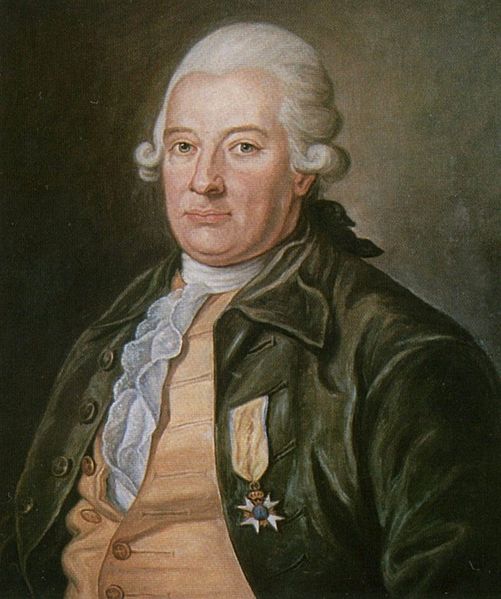
Count Peter von der Pahlen, Conspirator Against the Tsar

Count Pyotr Alexeevich Palen  (Palmse, Russia, 17th July 1745 – Mitava, Russia, 13th February 1826)

Count Pyotr Alexeevich Palen

We take a trip to Russia today to meet a courtier who became embroiled in a plot to assassinate an emperor.

The noble-born Pahlen came from a long and celebrated lineage and began his military career with action in the Russo-Turkish Wars, where he was decorated for distinguished service. Respected by his men and commanders, Pahlen was on the road to success from an early age.

With his reputation at a high, Pahlen moved into politics and in 1795 was appointed Governor General of Courland Guberniya. The year after his appointment Pahlen was appointed to command the Cuirassier Regiment of Riga, but found himself at odds with Emperor Paul, who questioned his involvement with the now disgraced Prince Platon Zubov. Although Pahlen hung onto office until 1797, Paul finally succeeded in having him discharged from the position as well as his place in the military.

Pahlen's fall from grace was short-lived, however, and he was soon back in the military as Commander of the Household Troops of Horse Regiment, winning back the favour of Paul and rising to the position of military governor of Saint Petersburg, on top of numerous other decorations. However, Paul's favours were fleeting and the capricious monarch and Pahlen enjoyed a fractious relationship. Fearing for the security of his position after a number of sackings and reinstatements, Pahlen joined a conspiracy against the monarch and eventually became one of the ringleaders.

Pahlen was present on the evening of Paul's assassination and incurred the lifelong wrath of his widow, Empress Maria Feodorovna. Although Pahlen's friendship with the new Tsar meant that he survived the ensuing court martial, he  had no choice but to go into exile to his country estate, where he remained until his death.


Life in the Georgian Court, true tales of 18th century royalty, is available at the links below.

Book Depository (free worldwide shipping)

Sunday, 5 January 2014

An Attempted Regicide

If you're a French monarch then you should run for cover today as we have an assassin on the loose and he is out to put paid to Louis XV of France. Though unsuccessful, the would-be killer suffered a terrible fate for his actions, this time at the hands of the state.

On 5th January 1757, Robert-François Damiens, whose erratic behaviour had earned him the nickname, Robert le Diable, had not enjoyed a happy life. His somewhat sorry existence was to reach its final act on a cold winter evening at Versailles, where Louis XV was preparing to leave the palace in the company of his guards.


Robert-François Damiens

As Damiens skulked in the darkness of the grounds, at around six o'clock in the evening, Louis emerged from the guardhouse and began to walk towards his waiting carriage. Seizing the moment, Damiens leapt from his hiding place and shoved his way through the king's bodyguards, slashing at Louis with a knife. The king's thick winter coat provided protection when the knife struck his torso and he gave a cry of alarm, his bodyguards leaping to his defence.

The assassination attempt had failed and the king was left with nothing more serious than a scratch. Damiens made no attempt to flee the scene and was immediately taken into custody, where he suffered dreadful tortures in an effort to extract the names of any accomplices he might have. When Damiens refused to name anyone, he was given the dubious honour of being the last man to be drawn and quartered. 

The one thing that the courts and torturers were never able to explain was exactly why Damiens had attempted to assassinate Louis. Some claimed that he was a member of an anti-monarchist Jesuit conspiracy, whilst others held that he was working on behalf of the king's opponents in the Parlements. Damiens himself gave no confirmation, not was he ever linked to another, wider conspiracy against Louis.

On 28th March 1757 he met his hideous fate before an enormous crowd that had gathered to watch the would-be regicide go to his death. The already-broken man suffered further tortures as his gruesome sentence was carried out in the name of justice. After his gruesome public execution, the remains of Damiens were burned and he entered the annals of French infamy.

Robert-François Damiens was only the second man in a century and a half to be drawn and quartered in France and he would be the last. As his ashes were scattered to the four winds, the archaic punishments he suffered were finally consigned to history.

Life in the Georgian Court, true tales of 18th century royalty, is available at the links below.

Pen and Sword
Amazon UK
Amazon US
Book Depository (free worldwide shipping)

Thursday, 8 August 2013

Baron Carl Fredrik Pechlin: A Conspirator Against a King

Baron Carl Fredrik Pechlin (Holstein, Germany, 8th August 1720 – Varberg, Sweden, 29th May 1796) 


Portrait of Baron Carl Fredrik Pechlin By Per Krafft, 1774
 Baron Carl Fredrik Pechlin by Per Krafft, 1774

Well, we're back to the continent today and off to Sweden again for a tale of conspiracy. There are plenty of politicians and monarchs who don't get on, but not many of them go on to plot murder.

Pechlin was the son of an influential Holstein politician and began his working life as a soldier, rising to the rank of Major-General. However, his true and somewhat questionable gifts lay in the political arena, as he became a key figure in the Swedish Age of Liberty and his vast influence would earn him the nickname of General of the Riksdag.

At the time of his ascendancy, the opposition Caps party were finally gaining ground against the ruling Hats in Sweden after a quarter of a century of in the political doldrums. Professing to support the Caps, Pechlin was in fact working hard behind the scenes to secure his own future and at the last moment switched sides, his considerable influence securing the Hats a further term and himself a senior office within the government. However, his former political allies were not to be so easily thwarted and successfully petitioned to have him suspended from the Riksdag for two years. In fact, in 1769, Pechlin did exactly the same thing in reverse, exchanging the Hats for the Caps once more as he sailed with the prevailing political wind; it would not be the last time he switched allegiances and all the time he continued secret negotiations with other nations, his eye fixed firmly on his own fortunes.


Portrait of King Gustav III by Alexander Roslin, 1777
King Gustav III by Alexander Roslin, 1777
When the royal coup d'état occurred in 1772 Pechlin quietly withdrew from public life, returning to the fore nearly fifteen years later as one of King Gustav III's most vocal opponents. In fact, he was to grow so loud and vociferous that the King, mindful of rumours that named Pechlin as a Russian spy, had him detained as moves towards an absolute monarchy gathered pace. This was to prove a fatal mistake on the part of Gustav, raising the ire of the nobility and gaining Pechlin fresh supporters across the upper classes. As his influence diminished and the government's powers faltered, Pechlin took a drastic step and, with a small group of acquaintances, agreed that the only solution to the problem would be the death of Gustav III.

On 15th March the conspirators met at Pechlin's home  to finalise their plans and the following day, whilst attending a masque, the king was shot. He survived the assassination attempt but the wound became infected and two months later, Gustav died. Pechlin was arrested and though no solid evidence could be found other than the words of his co-conspirator, Count Gustav Horn, he was imprisoned in Varberg Fortress, where he died four years later.


Photograph of Varberg Fortress
Varberg Fortress

Posterity has not been kind to Pechlin and he is remembered as the worst kind of politician; duplicitous, self-serving and corrupt, he thought himself untouchable and it was this that finally brought him down, the General of the Riksdag laid low by hubris.

Life in the Georgian Court, true tales of 18th century royalty, is available at the links below.


Book Depository (free worldwide shipping)

Saturday, 27 July 2013

"I killed one man to save 100,000": Charlotte Corday

Marie-Anne Charlotte de Corday d'Armont (Normandy, France, 27th July 1768 – Paris, France, 17th July 1793)

Portrait of Charlotte Corday painted in the condemned cell by Jean-Jacques Hauer
Charlotte Corday painted in the condemned cell by Jean-Jacques Hauer

My not so happy ever after tale of the death of Marat has proven one of the most popular stories here at the Guide and the little ones of Gin Lane never tire of hearing it. Funny thing is, they're not so fussed about the man in the bath, it's the girl on the guillotine who grabs their fancy so, on the anniversary of her birth, I thought the time had come to tell a little more of Charlotte Corday.

Charlotte was born in the tiny Normandy hamlet of Saint-Saturnin-des-Ligneries to a minor line of aristocrats. Following the death of her mother and sister, Charlotte and her surviving sibling were raised in the Abbaye-aux-Dames convent at Caen. Here she studied the work of philosophers including Rousseau and Voltaire, proving herself to be a bright and serious-minded girl. When she reached adulthood Charlotte did not take holy orders but instead left the convent. She remained in Caen and set up home with her cousin and good friend, Madame Le Coustellier de Bretteville-Gouville. 

Photograph of Charlotte Corday's childhood home
Charlotte's childhood home

Charlotte met a number Girondins in Caen and came to sympathise with their political ideals. Already unsure about the direction in which the revolutionaries were steering her country, she admired the moderate approach of the Girondin leaders and shared their distrust and dislike of the Montagnards. As she grew more politicised and her opinions more firm, Charlotte watched in horror as violence swept through France. After the September Massacres, she began to fear that the country was teetering on the brink of civil war.

Fired by fear for the future, Corday began to conceive of a plan to remove one of the most outspoken and radical Jacobins, Jean-Paul Marat. She was, of course, not Marat's only enemy and he had spent time in hiding before due to threats on his life but he could hardly have conceived of the threat posed by the seemingly harmless young woman who would finally bring him down.

On 9th July 1793, Charlotte travelled from Caen to Paris, where she took lodgings at the Hôtel de Providence and wrote a document explaining her forthcoming violent actions, Addresse aux Français Amis des Lois et de la Paix ("Address to the French People, Friends of Law and Peace"). Four days later she concealed a kitchen knife in her clothing and went to visit Marat, supposedly to share intelligence with him.

Despite his wife's reservations, Charlotte was admitted to Marat's home, the revolutionary forced to conduct his business from a bathtub due to an agonising skin condition. As the short meeting concluded, Charlotte rose to her feet, drew the concealed blade, and plunged it deep into the revolutionary's chest. 

Painting of Charlotte Corday by Paul-Jacques-Aimé Baudry, 1860
Charlotte Corday by Paul-Jacques-Aimé Baudry, 1860 
The assassin asked for no mercy at her trial, declaring that she had "killed one man to save 100,000." During her short imprisonment she wrote a number of letters and even sat for a portrait; her lawyer, Chauveau-Lagarde had previously defended Marie Antoinette but once again his efforts were to be in vain. Happy to lay down her life for her beliefs, Charlotte repeatedly admitted her guilt and the revolutionary tribunal sentenced her to death.

Just four days after Marat breathed his last, Charlotte was taken to the guillotine and executed. Moments after the blade fell, executioner's assistant Legros lifted her head from the basket and slapped her cheek. Charlotte's executioner, Charles-Henri Sanson, echoed the crowd's outrage at this affront and Legros was rewarded with a three month prison sentence for his troubles.

In fact, Charlotte's actions were to have little impact on the path of the revolution and instead Marat was hailed as a martyr whilst Corday's name was left to languish. Now they are forever linked, bound by art, literature and history.


Saturday, 13 July 2013

"Short in stature, deformed in person, and hideous in face": Jean-Paul Marat

Jean-Paul Marat (Boudry, Switzerland, 24th May 1743 - Paris, France, 13th July 1793)


Portrait of Jean Paul Marat by Joseph Boze, 1793
 Jean-Paul Marat by Joseph Boze, 1793

"Short in stature, deformed in person, and hideous in face",  physician, scientist, journalist, radical and victim of an audacious assassination, Marat's life was blighted by illness, controversy and thwarted ambition.

Highly ambitious and with a gift for making influential connections, Marat left home at the age of 16 with no formal qualifications and nothing but the desire to succeed. The young man travelled through Europe, teaching in Bordeaux and undertaking medical training in Paris before his travels took him to London and the artistic circle of Angelika Kauffmann. Remaining in England, he began to write on the subject of slavery, eventually producing the highly-acclaimed Chains of Slavery in 1773.

Finally on his way, Marat returned to Paris and established a medical practice, eventually winning the lucrative position as a physician in the household of the comte d'Artois, later to become King Charles X. Not satisfied to rest on his already considerable laurels, Marat embarked on a programme of scientific discovery, extending his intellectual and political circle and continuing to publish increasingly radical works. Just as he abandoned his medical career in favour of science, so too would this new direction eventually be set aside in preference of a career in journalism, Marat's attentions now firmly set on the politics of revolution.

The increasingly radical Marat began publishing his own newspaper, L'Ami du Peuple, in 1789. The paper was highly critical of Girondin leaders and he eventually found himself forced into hiding, fearing their vengeance. Not content with life as a journalist, Marat moved into politics when he was elected to the National Convention in 1792. His criticisms of the Girondins grew in both fury and scale and he began to call for violent action against them, a tactic that swiftly led to his arrest and imprisonment. Brought before the Tribunal, the persuasive, passionate Marat spoke in his own defence and when he was acquitted, his supporters celebrated uproariously.

However, Marat's always poor constitution was further weakened by the stress of his experiences and he began to be plagued by a debilitating skin condition that left him covered in itchy, suppurating blisters. He increasingly took to his bath for the sake of comfort, conducting his business from this somewhat unorthodox office. When the Girodins fell in June 1792 Marat was already virtually housebound and increasingly isolated from his political allies, growing distant from the centre of power.


The Death of Marat by Jacques-Louis David
The Death of Marat by Jacques-Louis David, 1793

On 13th July 1793 Charlotte Corday visited Marat's home, offering confidential information on the remaining, fugitive Girodins. The young woman was admitted to the bathroom which had become his virtually permanent residence and there followed a short conversation, after which she drew a knife from her corset and plunged it into his chest. Within seconds Jean-Paul Marat was dead, the victim of a royalist Girondin who had achieved what his other enemies could not, to finally silence the ambitious radical for good.

Four days later Marie-Anne Charlotte de Corday d'Armont went to the guillotine, telling her trial that she had "killed one man to save 100,000."

In death, Marat briefly achieved the importance he had sought all his life. Immortalised in paint and sculpture, his funeral was attended by the most influential figures in Paris and he was held up as a martyr to the revolutionary cause. Eventually though this flame of adoration dimmed and Marat passed into memory, his name forever linked with that of Charlotte Corday, the woman who took his life on a summer day in 1793.


Portrait of Charlotte Corday by Jean-Jacques Hauer
Charlotte Corday by Jean-Jacques Hauer

It seems that Charlotte really struck a cord with the Gin Laners, earning herself her own entry. Read the story of Charlotte's life here!