Showing posts with label Gustav III. Show all posts

Monday, 15 December 2014

The Death of the "Swedish Mozart"

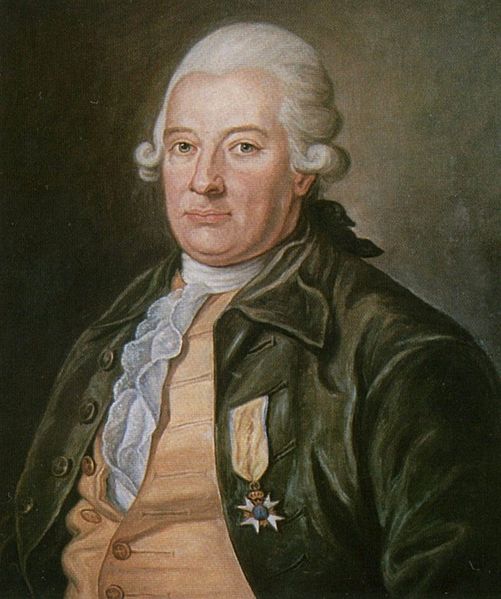
Joseph Martin Kraus (Miltenberg am Main, Germany, 20th June 1756 – Stockholm, Sweden, 15th December 1792)

Joseph Martin Kraus, 1775
1775

On more than one occasion, we have crossed to the beautiful land of Sweden to spend time in the company of Gustav III, who died at the hands of assassins. Today, however, marks the anniversary of the death of Joseph Martin Kraus, the composer responsible for Gustav's monumental Funeral Cantata, which can be heard by clicking on the video below.

Kraus was a favourite of King Gustav III and under his patronage, the young composer flourished. He undertook a tour of Europe, assumed high academic office and composed stirring music to accompany state occasions for the king and court, earning himself a daunting reputation in his adopted land.

By the time Gustav breathed his last, his composer of choice was already beginning to suffer from the symptoms of tuberculosis and, as the year wore on, those symptoms become ever more debilitating until the composer was forced to take to his bed.

Kraus did not leave his bed as the winter set in and, on 15th December 1792. he died. As family and friends gathered to mourn, the composer's body was placed in a casket and carried by torchlight across the frozen expanse of the Brunnsviken  lake and then on to Tivoli. Here he was laid to rest, yet the Swedish Mozart's music lives on.


Saturday, 29 March 2014

The Assassination of King Gustav III of Sweden

King Gustav III of Sweden (Stockholm, Sweden, 24th January 1746 - Stockholm, Sweden, 29th March 1792)


King Gustav III by Alexander Roslin, 1777

I had not intended to revisit the ailing King Gustav III of Sweden but the tale of the attempt on his life on 16th March 1792 seemed to strike a chord with salon visitors. For that reason I thought we would pay one final visit to the court of Gustav and discover how his sorry story ends.

As we have already learned, Gustav's fate was sealed when he chose to ignore an anonymous death threat received during dinner in Stockholm. Rather than flee, he instead strode into a glittering masked ball and found himself surrounded by assassins. When Jacob Johan Anckarström pulled the trigger on a gun loaded with balls, nails and scraps of iron, the weapon discharged into the king's back, wounding him seriously. Despite his injury, Gustav remained on his feet and as he staggered to remain upright, his aides rushed to his side with the intention of getting their monarch to safety.

As the assassins were apprehended, Gustav was returned to his quarters and the royal physicians flocked to the king's aid. At first it appeared that the assassination attempt had failed as Gustav lived and, with medical care, continued to serve as head of state. In fact, he was never to regain his health and within days the wound had become infected and the king's condition began to deteriorate rapidly.

As the days drew on the wound grew ever more septic and Gustav's weakened condition left him easy prey to pneumonia. On 29th March Gustav's life finally reached its final hours and with his dying breath he murmured, "A few moments rest would do me good." Those were the final words King Gustav III would ever speak and he died soon after, less than a fortnight from the night of the fateful, fatal ball.

Life in the Georgian Court, true tales of 18th century royalty, is available at the links below.

Pen and Sword
Amazon UK
Amazon US
Book Depository (free worldwide shipping)

Sunday, 16 March 2014

The Attempted Assassination of King Gustav III of Sweden

It's well known around town that we Gilflurts like a masked ball and our tale today takes us to one such occasion, though it was far from a happy affair. If you ever receive an invitation to a Gilflurt ball I can assure you that you need not fear assassination, though that's far more than can be said for King Gustav III of Sweden!


King Gustav III by Alexander Roslin, 1777

Early in the evening of 16th March 1792, King Gustav III of Sweden arrived at the Royal Opera House in Stockholm to attend a masked ball. Resplendent in his costume, he made sure to proudly display the dazzling star of the Royal Order of the Seraphim for all to see. This was, of course, something of a fatal error and even amongst the swirl of costume and masks, there could be no doubt as to who the monarch might be.


King Gustav III's costume

Enjoying dinner with friends, Gustav was passed an anonymous death threat written in French yet it did little to spoil the party. After all, this was far from the first such letter he had received in his time and so far all had come to nothing. Instead he finished dinner and went down to join the revellers. In fact, he had hardly been at the party before he found himself surrounded by a party  of five men, who had joined our old friend, Baron Carl Fredrik Pechlin, in a conspiracy against the king though the canny Pechlin was, of course, not present at this assassination attempt. All hid their identities behind black masks and as the men greeted the monarch in French, Jacob Johan Anckarström shot Gustav once in the back. The pistol was loaded with balls, nails and scrap lead and iron and the contents emptied themselves into Gustav's back, though he remained on his feet.


Jacob Johan Anckarström


Panic broke out and the king was rushed from the scene. By the following dawn the attackers were in custody and they soon implicated their co-conspirators, all of whom were imprisoned and Anckarström would eventually be executed for his part in the plot. It seemed at first that the plan to remove Gustav had failed yet fate had a final twist to take and far from recovering, the king began to weaken. The wound Anckarström had inflicted turned septic and on 29th March 1792, Gustav III of Sweden died, a victim of assassination.

Life in the Georgian Court, true tales of 18th century royalty, is available at the links below.

Pen and Sword
Amazon UK
Amazon US
Book Depository (free worldwide shipping)

Wednesday, 4 September 2013

From Versailles to the Lynchmob: Hans Axel von Fersen

Hans Axel von Fersen (Stockholm, Sweden, 4th September 1755 – Stockholm, Sweden, 20th June 1810)


Hans Axel von Fersen by Noël Hallé
Hans Axel von Fersen by Noël Hallé 

Well, we're taking a slight detour across Europe today and, after yesterday's adventures in France and Italy, it's time to return to Scandinavia. We Gilflurts have always been keen on a gentleman with an eye for the ladies, especially one with a bit of scandal in his history, so Count Axel von Fersen is very welcome to join us on Gin Lane!

Fersen was born to Countess Hedvig Catharina De la Gardie and Field Marshal Axel von Fersen the Elder. Raised in genteel luxury, the young man was schooled at home in preparation for a glittering career in the military. By the age of 18 he was at the French court and the striking and cultured Fersen made a deep impact on a certain Marie Antoinette, who found him utterly beguiling. With his military career in the ascendancy he accompanied Gustav III of Sweden through Europe, kept away from his circle at Versailles by the business of war.


Axel von Fersen by Noël Hallé
Hans Axel von Fersen by Noël Hallé
Fersen travelled with General Rochambeau to America, where he served as interpreter at meetings between the General and Washington. Here he proved himself to be a brave and decisive soldier,  hailed for his distinguished service at the 1781 Siege of Yorktown.

When Fersen returned to France he resumed his friendship with Marie Antoinette and, as gossips at the time murmured, there was the distinct possibility that the two were far more than friends. They pointed to the intimacy between the couple and whispered about the paternity of Louis-Charles, born in 1785. Whilst no evidence exists beyond conjecture to support the rumours that swirled around the queen and her favourite, there can be little doubt that the pair were quite devoted to one another. Indeed, Fersen was a favourite among the ladies wherever he travelled; intelligent, handsome and cultured, he seemed to live a charmed life.


Axel von Fersen by Peter Adolf Hall, 1783
Hans Axel von Fersen by Peter Adolf Hall, 1783

Fersen remained fiercely loyal to Marie Antoinette and her family, remaining at court as the clouds of revolution gathered. With the worsening situation he began assisting with plans to get the family to safety, playing an important role in the ill-fated flight to Varennes. It was Fersen who commissioned the carriage that would carry the Marie Antoinette, Louis and their children and he even travelled with them on part of their unsuccessful journey to the border. One can only imagine the horror with which he must have greeted news of their capture and from that moment, there would be no more hope of escape for the doomed family.

With the  situation in France growing ever more dire, Fersen was dispatched to Austria to entreat Emperor Leopold to join a coalition in support of the French monarchy. When Leopold proved himself disinterested in the idea, Fersen requested that he be released from the pointless mission and returned to France. At great danger to himself, he presented himself in Paris under an assumed identity and stole into the Tuileries, where he was able to spend an evening with the king and queen discussing counterrevolutionary plans. He made further secret visits but his audacity was to prove unrewarded, the royal family utterly trapped.


Hans Axel von Fersen

All diplomatic efforts exhausted, Fersen could do nothing to intervene as his friends went to their deaths, leaving the Count utterly bereft at the loss of those so previous to him. Returning to Sweden he established a political career but found his efforts on the continental stage hampered by the notoriety of his closeness to the French court. Napoléon flatly refused to deal with him, sounding the death knell for any wider political ambitions he might have had. His efforts frustrated, Fersen took a position as envoy to the court of Baden, a long way from flitting about the grounds of the Tuileries in disguise. His star fell  further when Gustav III died and was replaced by a regent, Charles Philip, Duke of Södermanland. As a great friend and supporter to the late king, Fersen was sidelined until the reign of Gustav IV Adolf, at which point he returned to the Swedish court in triumph.

When revolution came to Sweden in 1809, Gustav IV Adolf was swept unceremoniously aside in favour of Charles XIII.  Fersen distanced himself from the turmoil and voiced his support for Gustav IV Adolf's son, Prince Gustav of Vasa, believing him the only legitimate heir to the throne. His beliefs were to come back to haunt him when Carl August died suddenly and once again the gossip began, this time that the vengeful Fersen had played a part in poisoning the Dane.


The Murder of Axel von Fersen by Alfred Bexelius, 1810

Even as he found himself tainted with the rumours that he had conspired to commit murder, Fersen's official duties found him in the unenviable position of having to accompany Carl August's funeral cortege through Stockholm. An enormous crowd gathered to mourn the popular Crown Prince and as the cortege progressed, the spectators began to heckle and throw stones at Fersen's carriage. Fleeing the unrest he attempted to seek shelter in a private house but the mob attacked him, dragging him from his refuge.

The Royal Life Guards made a token effort to escort Fersen to the court house but the mob had grown too hostile to be stopped. Fersen was beaten to death as the Life Guards stood by, their commanding officer instructing his men to hold their fire. Later some suggested that Fersen was sacrificed to the mob by the new King, desperate to distract the crowd's ire at the death of the Crown Prince. Whatever the reason for the inaction of the troops at the scene, by the time they finally intervened in the riot, Fersen was dead.


Monument to Axel von Fersen

Eventually, Fersen was cleared on any involvement in the death of the Crown Prince and he was buried with full honours as a Marshal of the Realm. Today his name remains forever linked with that of Marie Antoinette, the beloved friend he was unable to save.


Life in the Georgian Court, true tales of 18th century royalty, is available at the links below.


Book Depository (free worldwide shipping)

Thursday, 8 August 2013

Baron Carl Fredrik Pechlin: A Conspirator Against a King

Baron Carl Fredrik Pechlin (Holstein, Germany, 8th August 1720 – Varberg, Sweden, 29th May 1796) 


Portrait of Baron Carl Fredrik Pechlin By Per Krafft, 1774
 Baron Carl Fredrik Pechlin by Per Krafft, 1774

Well, we're back to the continent today and off to Sweden again for a tale of conspiracy. There are plenty of politicians and monarchs who don't get on, but not many of them go on to plot murder.

Pechlin was the son of an influential Holstein politician and began his working life as a soldier, rising to the rank of Major-General. However, his true and somewhat questionable gifts lay in the political arena, as he became a key figure in the Swedish Age of Liberty and his vast influence would earn him the nickname of General of the Riksdag.

At the time of his ascendancy, the opposition Caps party were finally gaining ground against the ruling Hats in Sweden after a quarter of a century of in the political doldrums. Professing to support the Caps, Pechlin was in fact working hard behind the scenes to secure his own future and at the last moment switched sides, his considerable influence securing the Hats a further term and himself a senior office within the government. However, his former political allies were not to be so easily thwarted and successfully petitioned to have him suspended from the Riksdag for two years. In fact, in 1769, Pechlin did exactly the same thing in reverse, exchanging the Hats for the Caps once more as he sailed with the prevailing political wind; it would not be the last time he switched allegiances and all the time he continued secret negotiations with other nations, his eye fixed firmly on his own fortunes.


Portrait of King Gustav III by Alexander Roslin, 1777
King Gustav III by Alexander Roslin, 1777
When the royal coup d'état occurred in 1772 Pechlin quietly withdrew from public life, returning to the fore nearly fifteen years later as one of King Gustav III's most vocal opponents. In fact, he was to grow so loud and vociferous that the King, mindful of rumours that named Pechlin as a Russian spy, had him detained as moves towards an absolute monarchy gathered pace. This was to prove a fatal mistake on the part of Gustav, raising the ire of the nobility and gaining Pechlin fresh supporters across the upper classes. As his influence diminished and the government's powers faltered, Pechlin took a drastic step and, with a small group of acquaintances, agreed that the only solution to the problem would be the death of Gustav III.

On 15th March the conspirators met at Pechlin's home  to finalise their plans and the following day, whilst attending a masque, the king was shot. He survived the assassination attempt but the wound became infected and two months later, Gustav died. Pechlin was arrested and though no solid evidence could be found other than the words of his co-conspirator, Count Gustav Horn, he was imprisoned in Varberg Fortress, where he died four years later.


Photograph of Varberg Fortress
Varberg Fortress

Posterity has not been kind to Pechlin and he is remembered as the worst kind of politician; duplicitous, self-serving and corrupt, he thought himself untouchable and it was this that finally brought him down, the General of the Riksdag laid low by hubris.

Life in the Georgian Court, true tales of 18th century royalty, is available at the links below.


Book Depository (free worldwide shipping)

Wednesday, 24 July 2013

Conspiracy, Coups and Crown Jewels: Louisa Ulrika of Prussia

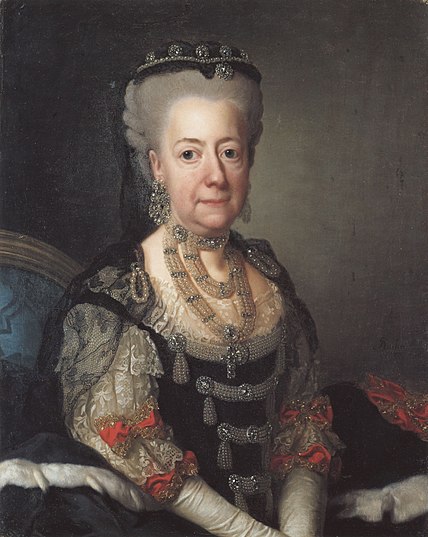
Louisa Ulrika of Prussia (Berlin, Prussia, 24th July 1720 - Svartsjö, Sweden, 24th July 1782)


Louisa Ulrika by Alexander Roslin, 1775

Intrigue, ambition and political manoeuvring are staple ingredients in the heady world of dynastic politics and Louise Ulrika of Prussia, who died on this day in 1782, enjoyed more than her fair share of all three. From a marriage that even her own brother warned the groom against, she would rise to the heights of monarchy and try to bring about a revolution.

Born to Frederick William I of Prussia and Sophia Dorothea of Hanover, Louisa Ulrika was the younger sister of Frederick the Great. A sought after and eligible young woman, she married the Crown-Prince of Sweden, Adolf Frederick of Holstein-Gottorp, in 1744. The match was made against the express wishes of Frederick who thought his sister arrogant, overly-ambitious and a potentially dangerous influence on the Swedish monarchy. Perhaps that was true or perhaps Frederick thought that his other sister, Princess Anna Amalia of Prussia, would be a more pliant figure to achieve his own ends at court but whatever his reasons for speaking out, the marriage went ahead as planned.


With Sweden desperate for an heir, Louisa Ulrika was hugely popular with the people. Though her innate arrogance would eventually see her lose favour within the aristocracy, Louisa Ulrika formed strong alliances early on, especially with courtier Count Carl Gustaf Tessin. Tessin adored the new bride and made himself indispensable to her household, eventually serving as governor to her first child, the heir to the throne of Sweden. The Count's fortunes would change dramatically in 1751 when the newly crowned King found him on his knees at Louisa Ulrika's feet; outraged, Adolf Frederick removed Tessin from court and Louisa Ulrika did nothing to save the reputation of this perhaps too loyal follower.


At the time of her marriage Louisa Ulrika already held unshakable political opinions and was a firm believer in the system of absolute monarchy, something the Swedes did not subscribe to.  However, the intelligent Louisa Ulrika was also a strategist with one eye on the future and she drew loyalists to her until she eventually formed a political party of her own, the Hovpartiet (Court Party). Louisa Ulrika was not above using bribery to achieve her ends, all the time inspiring fierce affection in her followers.

The highly-cultured Louisa Ulrika championed the arts and sciences in Sweden, promoting and funding scientists in the country. As much as she made her cultural mark, the chance to stamp herself on the political landscape of her new nation would prove more elusive.

When she became queen in 1751 she realised the true limits of a Swedish constitution that rendered its monarchs as powerless figureheads, all policy decisions taken by parliament. Her personal ambitions were frequently frustrated by government and by 1756 she was ready to implement her plans, poised for revolution.

The plot had been gestating for years; indeed, half a decade earlier Louisa Ulrika substituted her coronation crown diamonds with glass in order to pawn the gemstones in Berlin and finance her coup d'état. With the followers of Hovpartiet behind her she would seize power once and for all, smashing the constitution and returning Sweden to the rule of an absolute monarchy. Never lacking in self-confidence, Louisa Ulrika's plans were initially frustrated when her own lady-in-waiting, Ulrika Strömfelt, informed parliament that the crown jewels had been tampered with. Even then fortune favoured the Queen as her husband fell ill and she was able to use his period of convalescence to retrieve the diamonds. All the time she continued to plot, arming her followers and developing a plan in which hired criminals would riot in the streets, causing widespread fear and chaos. The royalists, led by the King, would restore order and the monarchs would be swept to power on a tide of public adoration.


In the end it was alcohol and a loose tongue that caused the plot to falter as conspirator Ernst Angel drunkenly discussed the plans in the earshot of police. Arrested and interrogated, Angel gave up the conspirators and justice was swift and merciless as executions, flogging and exile followed. For the Queen the punishment was less painful but immensely humiliating. The proud Queen, who believed in the right of monarchy above all else, was forced her to write a letter of confession and regret. Louisa Ulrika did as she was commanded though said privately that her only true regret was that her revolution had failed. Her husband was put on notice by parliament that, should such a plot occur again, he would be removed from the throne.
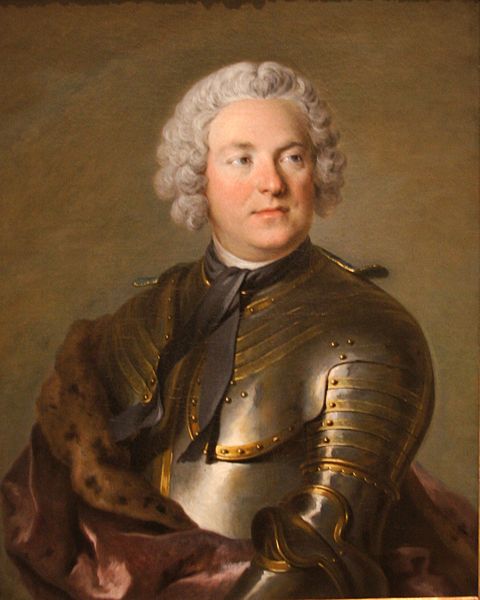
Portrait of Count Carl Gustaf Tessin by Louis Tocqué
Portrait of Count Carl Gustaf Tessin by Louis Tocqué,  1741  

The ambitious Louisa Ulrika was not to be sidelined forever and her chance for redemption came with the Seven Years War, when Sweden faced Prussia across the battlefields. As the tide of war turned against Sweden in 1763, parliament found itself forced to ask Louisa Ulrika to negotiate with her brother, Frederick, King of Prussia. For a long time she refused, enjoying this new power over the government she so loathed but when she did intervene, her efforts were successful. All her outstanding debts were cancelled and the Queen was once again in a position to set about bribing members of the government to ensure the decisions of parliament went as she wished.

Her efforts were destined to fail once more and as King Frederick's reign entered its twilight, so too did her influence dim as her own followers drifted away to join her son, Crown Prince Gustav. In 1771 the King died and the following year the newly-crowned King Gustav III would succeed where she had failed, instigating a successful coup and restoring Sweden to an absolute monarchy. Enormously proud of his achievements, she was shocked and dismayed to find that Gustav intended to rule the country according to his own will himself and that her influence would not be needed. As he asserted his independence, Gustav actively went against her recommendations in matters of state and their relationship slowly and surely grew more vitriolic than ever before.


In 1777 our heroine was at the centre of yet more drama when she accused Gustav's wife, Sophia Magdalena, of philandering, claiming that the heir to the throne was the child of nobleman, Fredrik Munck. The scandal that followed was immense and embarrassing to the family as once again, Louisa Ulrika was forced to write yet another statement of regret and apology. The Queen Dowager was to remain estranged from Gustav until she was on her deathbed, when mother and son finally reconciled.

For Louisa Ulrika, luxury and privilege were no substitute for power; she lived a life of driving ambition fuelled by an unshakeable belief not only in monarchy but in her own abilities, ultimately  frustrated by hubris.

Read more about Louisa Ulrika's son, Charles XIII, here.

Life in the Georgian Court, true tales of 18th century royalty, is available at the links below.

Pen and Sword
Amazon UK
Amazon US
Book Depository (free worldwide shipping)