Showing posts with label van Loo (artist). Show all posts

Monday, 5 January 2015

The Death of Elizabeth of Russia

Elizabeth of Russia (Elizaveta Petrovna, Moscow, Russia, 29th December 1709 - St Petersburg, Russia, 5th January 1762)


Elizabeth of Russia by Charles-André van Loo, 1760

As we celebrate a new year, spare a thought for Empress Elizabeth of Russia, who did not have much to celebrate as January dawned in 1762. After two decades on the Russian throne she enjoyed the love of her people, respected for her refusal to capitulate to the policies of Prussia as she stamped her mark on her own country.


Elizabeth seized the crown after orchestrating a bloodless coup in 1741 and promised at the time that she would sanction no death sentences during her reign. It was a promise that she kept and one that only added to her popularity amongst her people, as did the certainty with which she steered the country through the Seven Years' War.


However, as we have seen so many times, all the grandeur and political success in the world were of little import when the time came to depart this mortal coil, and things were no different for Elizabeth. As she entered her fiftieth year, the Empress became aware that her health was beginning to fail and as her dizzy spells became more frequent and debilitating, the court physicians were summoned to tend to their monarch. Elizabeth, however, was not willing to submit to their treatments and instead she decided to soldier on, coping as well as she could with her ailments even as she became increasingly paranoid about the fate that awaited her, even going so far as to forbid her courtiers to use the word death.


Of course, forbidding discussion of death and avoiding medical treatment are not appropriate remedies for illness and the Empress declined further as the winter of 1761 deepened. Years of high living caught up with Empress and though she finally agreed to take her medicine, it had to be dipped in marmalade or otherwise sweetened; when bleeding or other interventions were discussed, she recoiled in horror at the very thought of it.


Confined to her bed, she gathered her most trusted friends to her and said her final prayers, finally passing away on 5th January 1762. After more than a month of lying in state Empress Elizabeth of Russia was laid to rest, her popular reign at an end.


Life in the Georgian Court, true tales of 18th century royalty, is available at the links below.

Pen and Sword
Amazon UK
Amazon US

Book Depository (free worldwide shipping)

Tuesday, 2 December 2014

"By way of pain one arrives at pleasure": The Death of the Marquis de Sade

Donatien Alphonse François de Sade, The Marquis de Sade (Charenton, France, 2nd June 1740 – Charenton, France, 2nd December 1814)


The Marquis de Sade by Charles-Amédée-Philippe van Loo, 1760
I was a most precious teen when I first became acquainted with the works of the Marquis de Sade and must honestly confess that I was not quite prepared for what I would find within the pages. Somewhat innocently, I had anticipated much sauce and very little else besides. Whilst there is unarguably plenty of the former, I was badly misinformed on the latter and it all proved a little too much for my impressionable eyes, eventually leading me to abandon my efforts to read de Sade and scurry back to the Brontes.

Much older and perhaps a smidgen wiser, I have since revisited de Sade's writing and though he will never be a favourite of mine, he is undeniably an important literary voice in the Georgian era. A writer of far more than just the erotica that is associated with him, the Marquis wrote prolifically on politics and philosophy, whether free or, as was so often the case, incarcerated.

The Marquis de Sade spent many long years behind the walls of numerous asylums and today marks the anniversary of his death, bringing to an end thirteen years of confinement in the Charenton asylum. Here the septuagenarian conducted an affair with the thirteen year old Magdeleine Leclerc, daughter of one of the asylum employees. He continued to write and when allowed, even staged plays performed by a cast of his fellow inmates.

Understandably, however, the elderly man was not happy with this limited existence. Plagued for years by ailments including asthma, gout and failing sight, he petitioned on numerous occasions to be released and on each occasion his pleas fell on deaf ears. Shattered by the death of his favourite son, Louis-Marie, in 1809, de Sade's mood sank ever lower in the final years of his life as he went through the motions of life without hope of respite.

Towards the end of November 1814, de Sade's health took a turn for the worst and he retired to bed, complaining of severe pains in his chest and stomach. He did not linger but died at ten o'clock on the evening of 2nd December, never having secured the freedom he so longed for.

He left behind a will stating that his body should not be anatomised or opened for any reason yet his words were ignored, and several years after his death, de Sade's skull was removed from his corpse. It went on something of a tour and became a cause célèbre in itself but that is a tale for another day.


Monday, 12 May 2014

The Life of Le Gros: Louis Philippe I, Duke of Orléans

Louis Philippe I, Duke of Orléans (aka Le Gros (The Fat); Versailles, France, 12th May 1725 - Paris, France, 18th November 1785)
 
Louis Philippe d'Orléans by Louis-Édouard Rioult after Louis-Michel van Loo, 1839

Today we welcome le Gros Louis to the salon, a man as illustrious as he was plump. Louis lived a life of wealth and privilege, but his personal life was somewhat less than perfection.

Louis d'Orléans was born in the glittering surroundings of the Palace of Versailles, the son of Louis, Duke of Orléans and his wife, Johanna of Baden-Baden. Immediately upon his birth the infant was given the title Duke of Chartres and he grew up at a somewhat precocious rate, mixing with the royal children of the ruling house of Bourbon.

When Louis Philippe was just fifteen his friendship with his cousin, Princess Henriette, blossomed into something more than playmates and the youngsters declared themselves in love. Representatives of the houses of Bourbon and Orléans met to discuss this proposed match and though the idea was given careful consideration, it was not to be. Cardinal Fleury, the influential and powerful minister employed to advise Louis XV, counselled the king against giving consent for his daughter to wed the young duke. After all, he pointed out, would this not bring the already powerful Orléans dynasty within a whisper of the throne itself? At this, Louis XV's initially positive take on the match soured somewhat; he refused his permission and young Princess never married anyone.
 

Louise Henriette de Bourbon-Conti by Jean-Marc Nattier, 1750
Instead, Louis Philippe was married off to his 17 year old cousin, Louise Henriette de Bourbon. She had been raised in a convent and would, it was hoped, make a suitable calm and composed Duchess.  However, that was not quite the case.

For a supposedly pious, innocent convent girl, the newly-created Duchess of Chartres proved surprisingly earthy and the newlyweds enjoyed a passionate honeymoon period. The couple adored one another yet their happiness was not  to last and as the teenaged Louise Henriette's behaviour at court grew more scandalous, so did she and her husband become distant. Despite this, the Duke and Duchess had three children, all of whom survived to adulthood. However. Louis Philippe's father was convinced of the illegitimacy of their offspring and refused to acknowledge the youngsters as members of his own family. In fact, the bride's own father likewise refused to acknowledge his grandchildren too as he believed his son in law incapable of fathering children.

Louis Philippe enjoyed great success on the battlefields and was decorated for his bravery and strategic thinking. When Louise Henriette died at the age of just 32 he was devastated despite their differences and entered a life of retirement and seclusion. Eventually he began a 14 year relationship with actress Étiennette Le Marquis, who would go on to bear him three further children.


Children of the Duke of Orleans by François-Hubert Drouais, 1762

He was not content to settle though and at the age of forty one married Charlotte Jeanne Béraud de La Haye de Riou, a widow who was more than a decade his junior. The morganatic marriage was approved only on condition that she never take a title nor attempt to become part of the Bourbon court, an arrangement that suited both bride and groom admirably.

Although Louis Philippe and his children did not see eye to eye on this second marriage, they were not to be at odds forever and Louis Philippe's generosity eventually saw relationships mended. His house became a magnet for intellectuals and theatricals, who flocked to his salons and he revelled in his position in such circles. Content and happy in the life he lived, Louis Philippe died peacefully at the age of sixty; at the end he was surrounded by his children and those he loved.


Life in the Georgian Court, true tales of 18th century royalty, is available at the links below.

Pen and Sword
Amazon UK
Amazon US
Book Depository (free worldwide shipping)

Saturday, 15 February 2014

Charles-André van Loo, First Painter to Louis XV

Charles-André van Loo (Nice, France, 15th February 1705 – Paris, France, 15th July 1765)


Charles-André van Loo by Louis-Michel van Loo, 1764

Today we meet yet another member of the van Loo artistic dynasty. Like the others members of his family who have visited the salon, Charles-André van Loo enjoyed enormous success throughout Europe and became a favourite of the most illustrious and noble households.


The Marquise de Pompadour as a Gardener by Charles-André van Loo, 1754
The Marquise de Pompadour as a Gardener, 1754
As the son of Louis-Abraham van Loo and grandson of Jacob van Loo, the young man could not have asked for a better pedigree and he was raised and tutored by his elder brother,  Jean-Baptiste van Loo. Together the siblings travelled through Italy and onto Rome, where van Loo embarked on intensive studies of anatomy and technique under Benedetto Luti before undertaking study of sculpture with Pierre Legros, though it was as a painter where his true talent could be found.


Halte de chasse by Charles-André van Loo, 1737
Halte de chasse, 1737

Van Loo remained in Italy until the age of 18 and then returned to France to settle in Paris, where he enjoyed enormous success and was the recipient of a Grand Prix from the Académie Royale de Peinture et de Sculpture. Buoyed by this triumph he once again travelled to Turin and Rome, winning the Grand Prix de Rome. The painter's reputation soared as he gathered more and more plaudits and he became a court favourite of king Victor Amadeus II of Sardinia, who commissioned a number of large-scale works.


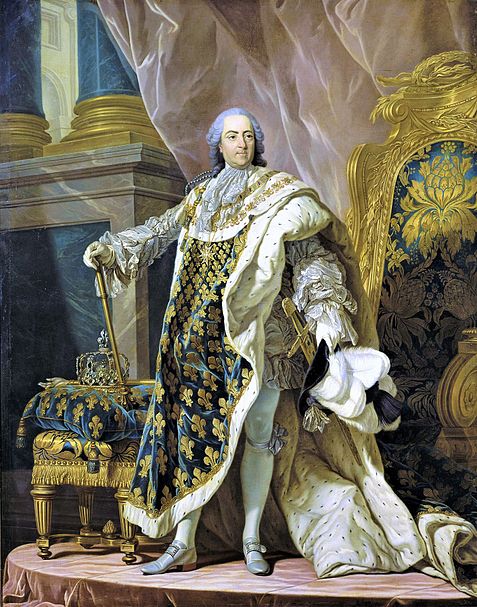
Louis XV by Charles-André van Loo
Louis XV

More travels followed before van Loo returned to settle in Paris in 1735 as a member and later director of the Académie Royale de Peinture et de Sculpture, where he held enormous influence and respect. Appointed First Painter to Louis XV in 1762, he remained hugely popular and successful until his death, favoured by the richest names in Europe.

Life in the Georgian Court, true tales of 18th century royalty, is available at the links below.

Book Depository (free worldwide shipping)

Empress Elizabeth Petrovna by Charles-André van Loo, 1760

Thursday, 19 December 2013

The Illustrious Career of Jean-Baptiste van Loo

Jean-Baptiste van Loo (Aix-en-Provence, France, 14th January 1684 – Aix-en-Provence, France, 19th December 1745)

Self Portrait by Jean-Baptiste van Loo
Self Portrait

We welcome our second van Loo today in the estimable form of Jean-Baptiste. Like his son he was a noted painter and virtually artistic royalty, enjoying a long and illustrious career that spanned the continent of Europe and England too.


Margaret ('Peg') Woffington by Jean-Baptiste van Loo, 1738

As the son of Louis-Abraham van Loo and grandson of Jacob van Loo, the young man could not have asked for a better education in art. He showed a natural aptitude for the subject and in his early twenties wealthy patrons paid for van Loo to undertake a trip to Rome, where he entered the tutelage of the celebrated Benedetto Luti and mastered his skills. He travelled Italy producing religious paintings and upon his visit to Turin became immensely popular at the court of Charles Emmanuel II, Duke of Savoy, for whom he executed several works.


Portrait of an Unknown Gentleman by Jean-Baptiste van Loo, 1740

Riding high on his Italian successes, the celebrated van Loo returned home to France and took up residence in Paris where he became a member of the Académie Royale de Peinture et de Sculpture. However, not content to rest on these considerable triumphs in 1737 he took up his travels again, visiting London to paint any number of illustrious clients including Walpole and members of the royal court. Van Loo was noted for the accuracy of his likenesses yet he did not believe in flattering his subjects, presenting sitters as they truly were, not as fashion might wish them to be.


Sir Robert Walpole, Earl of Orford, Prime Minister by Jean-Baptiste van Loo, 1740

His health in decline, van Loo moved back to Paris just five years later with his wife, Marguerite Le Brun. He did not settle in the capital though and instead returned to his hometown, where he died peacefully in 1745.

Friday, 15 November 2013

Charles-Amédée-Philippe van Loo, Professor d'Ecole des Beaux-Art

Charles-Amédée-Philippe van Loo (Rivoli, Italy, 25th August 1719 – Paris, France, 15th November 1795)


Charles-Amédée-Philippe van Loo by Adélaïde Labille-Guiard, 1785
Académie Royale de Peinture et de Sculpture by Adélaïde Labille-Guiard, 1785

We've had an artistic time of late and today return to the canvas to meet a man who was artistic royalty, coming from a long line of illustrious, successful painters. Charles-Amédée-Philippe van Loo became known as a painter of portraits and allegories and enjoyed a celebrated career.

Charles-Amédée-Philippe van Loo was born to the painter Jean-Baptiste van Loo and his wife, Marguerite Le Brun. With three generations of artistic blood running in his veins, the young van Loo showed an early aptitude for art and under the tutelage of his father, developed his skills and talent at a startling rate. He focussed on the basics of illustration and anatomy during his early years in Turin before moving on to Rome and more ambitious pieces, developing a particular interest in allegorical works.


The Camera Obscura by Charles-Amédée-Philippe van Loo, 1764
The Camera Obscura, 1764

When he reached the age of 19, van Loo's efforts were rewarded with the prestigious Prix de Rome. Following this victory he spent some time travelling Italy and eventually arrived in France, joining the Académie Royale de Peinture et de Sculpture in 1747. That same year he married Marie-Marguerite Lebrun, the happiness of his personal life mirrored by professional success.


Luise Henriette Wilhelmine von Anhalt-Dessau by Charles-Amédée-Philippe van Loo
Luise Henriette Wilhelmine von Anhalt-Dessaui

Van Loo enjoyed the patronage of illustrious European figures and in 1770 he was appointed Professor at the Ecole des Beaux-Arts in Paris, a role he held until his death. His works exist in the grandest houses and galleries of Europe, offering a rich window into the world he knew and the people who partonised him.

Life in the Georgian Court, true tales of 18th century royalty, is available at the links below.


Book Depository (free worldwide shipping)

Wednesday, 14 August 2013

The Twins of Versailles: Louise Élisabeth and Henriette de France

Louise Élisabeth de France (Marie Louise Élisabeth, also known as Babette, Versailles, France, 14th August 1727 – Versailles, France, 6th December 1759) 

Henriette de France (Anne Henriette, also known as Madame Seconde, Versailles, France, 14th August 1727 – Versailles, France, 10th February 1752) 

Louise Élisabeth and Henriette de France by Pierre Gobert, 1737
Louise Élisabeth and Henriette de France by Pierre Gobert, 1737

From Meiningen to Versailles and a story of royal twin sisters, siblings to our previous leading lady, Louise-Marie de France

Louise Élisabeth and Henriette were the eldest daughters of Louis XV and Maria Leszczyńska; born and raised at Versailles, the girls remained at the Palace under the tutelage of Marie Isabelle de Rohan, duchesse de Tallard, and developed into charming and intelligent young ladies. 

As was the tradition among the Catholic royal houses of the day, Élisabeth was betrothed to the Infante Philip of Spain, son of King Philip V and Elizabeth of Parma. Believing that the young princess could make a better dynastic match, the French courtiers were not particularly enthused by the engagement but Louis was determined and the deal was struck.

A proxy marriage took place between Élisabeth and Philip on 26th August 1739, the twelve year old bride and nineteen year old groom having yet to meet. Before the month was out the heartbroken girl was dispatched to join her new husband at Alcalá de Henares, leaving her twin sister at home in France. Whilst Élisabeth's future had already been decided, Henriette was deeply in love with her cousin, Louis Philippe d'Orléans, duc de Chartres. The couple approached the King with dreams of marriage but they were rejected by Henriette's father and the young princess remained unmarried. Instead, Henriette threw herself into her passion for music, becoming a talented instrumentalist under the tutelage of noted musicians.


Portrait of Madame Henriette playing the Viola da Gamba by Jean-Marc Nattier, 1754
Madame Henriette playing the Viola da Gamba by Jean-Marc Nattier, 1754

Deeply unhappy at being parted from Henriette, Élisabeth's marriage was not a particularly happy one though the couple had three children together. After the bright and informal court of Versailles she found the Spanish court dour and her strict mother in law, Elizabeth of Parma, interfering and imperious. Following the War of Austrian Succession in 1748 Élisabeth and Philip were named as Duke and Duchess of Parma after lobbying by Louis XV. Despite the upheaval, Élisabeth must have been relieved when she was allowed to return to Versailles to thank her father for this new position and she was overjoyed to be reunited with her family in France.

However, things were not as rosy as they had once been at Versailles and the sisters were temporarily divided by the presence of their father's mistress, Madame de Pompadour.  Watching the King lavish attention on his lover at the expense of his wife, Henriette loathed the woman. However, when Élisabeth visited France, she and Mme de Pompadour became good friends. Happily they were reconciled before Élisabeth travelled on to Parma, though Henriette would never warm to the apparent interloper at Versailles.


Portrait of the Family of Philip of Parma by Giuseppe Baldrighi, 1755
The Family of Philip of Parma by Giuseppe Baldrighi, 1755

In 1749 Élisabeth  arrived at her new home in Parma and, free of her mother in law's interference, set about stamping her own style on the new court. She brought a touch of Versailles to Parma, redecorating the Ducal Palace of Colorno to reflect a more French aesthetic; gone were the austere traditions of the Spanish court, replaced by the sense of informal fun that she had so enjoyed throughout her childhood.

When Henriette died of smallpox in 1752 a distraught Élisabeth returned to Versailles once more and remained there for the better part of a year. The woman who had once been so terrified to leave her home returned to Parma with a new sense of ambition, this time building a dynasty of her own. Securing good marriages for her three children,  Élisabeth forged a close alliance with Holy Roman Empress Maria Theresa, who promised her a European throne to call her own.


Portrait of Portrait of Louise Élisabeth of France by Louis-Michel van Loo
Portrait of Louise Élisabeth of France by Louis-Michel van Loo

In fact, Élisabeth would never achieve this lofty ambition and, during a visit to Versailles, contracted smallpox. She died in her childhood home on 6th December 1759. She was laid to rest beside her beloved sister at the Basilica of Saint-Denis, the twins reunited at last. 

Life in the Georgian Court, true tales of 18th century royalty, is available at the links below.

Pen and Sword
Amazon UK
Amazon US
Book Depository (free worldwide shipping)

Monday, 29 July 2013

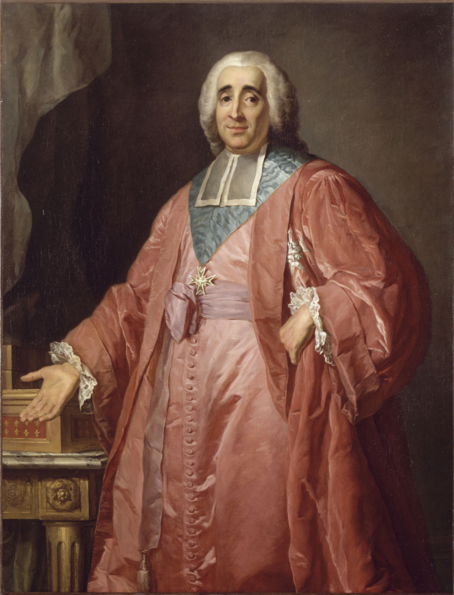
The Influential Career of René de Maupeou

René Nicolas Charles Augustin de Maupeou (Montpelier, France, 25th February 1714 – Le Thuit, Eure, France, 29th July 1792) 


Portrait of René Nicolas Charles Augustin de Maupeou

Here at the Guide we have had a bit of a French flavour of late, with stories of Corday and Robespierre to set our revolutionary fires burning. Today is another chap from over the Channel though he is, perhaps, a little less notorious than our previous subjects.


Maupeou was born into privilege and married into money; as assistant to his father, the young Maupeou was involved in parliamentary business from an early age and when Maupeou the elder retired from the office of Chancellor, Maupeau the younger was more than ready to step into his shoes.


Portrait of Louis XV by Louis-Michel van Loo
Louis XV by Louis-Michel van Loo

He rose through the ranks of office quickly, ingratiating himself at court and installing allies in key roles to further solidify his position. In 1770, Maupeou reformed the make-up of the French judiciary to ensure that those who were magistrates by right of succession could no longer make unilateral decisions, a move that alarmed the nobles of France. In fact, these magistrates would now be controlled by the King himself, as both monarch and Maupeou manoeuvred in an effort to secure the sovereign absolute power. This growing hostility flared even more when Maupeou introduced policies to tax the richest members of society, most of whom were exempt from levies. In another wildly unpopular move he introduced a bill by which Parlement could no longer veto royal edicts, essentially establishing Louis XV as an absolute monarch and giving Maupeou and his associates unparalleled control over tax and judiciary.


Portrait of Louis XVI by Antoine-François Callet
Louis XVI by Antoine-François Callet, 1789

However, where Maupeou had found support in Louis XV, when the King died, Louis XVI did not share his appreciation of the minister, preferring a new broom approach to his reign. In 1774, Maupeou was removed from office and went into seclusion.


Although he still held the title of Chancellor, he never entered the political arena again though his stringent, absolute policies were held up as model practice by the revolutionary government. One can only imagine that Maupeou might have appreciated the irony of this given his determined loyalty to the King he served and when he died in 1792, Maupeou had seen the old monarchy swept away on a tide of revolution.