Showing posts sorted by relevance for query dorothea. Sort by date Show all posts

Thursday, 21 November 2013

The Dramatic Exploits of Dorothea Jordan

Dorothea Jordan (née Bland; Waterford, Ireland, 21st November 1761 – Saint-Cloud, France, 5th July 1816) 


Mrs Jordan as Hypolita in 'She Would and She Would Not' by John Hoppner, 1791

As a theatre lover it is always a joy to welcome a member of the acting profession to the salon and today we are joined by a most notorious lady. Celebrated beauty, actress and mistress of the Duke of Clarence, it is a pleasure to tell the scandalous story of Dorothea Jordan.

Dorothea was born in Ireland to stagehand Francis Bland and his mistress, actress Grace Phillips. When his daughter was only 13, another actress caught Bland's eye and he left his mistress and five children behind to marry his newest fancy. With the family plunged into poverty despite Bland's occasional small payments, Dorothea joined her mother on stage, hoping to raise some money to support her siblings.

In fact, Dorothea did more than raise enough to feed her family; she had a natural and prodigious talent that saw her become one of the most popular comic actresses on the Irish stage, particularly renowned for the breeches roles that showed off her celebrated legs. Aged 20 she found herself coerced into an affair with Richard Daly, the married manager of the Theatre Royal, Cork, to whom she owed money. When her daughter, Frances, was born in 1782, Dorothea, along with her mother and the infant, fled Ireland for England and a new start.

Here Dorothea took the name Mrs Jordan to suggest respectability and embarked first on an affair with Lieutenant Charles Doyne and then with Tate Wilkinson, a Leeds-based acting company manager. Whilst still involved with Wilkinson Dorothea fell in love with George Inchbald, the company's leading man and though she was devoted to him throughout their affair, Inchbald was reluctant to commit. Finally, in 1786 she left Inchbald behind for the apparent security offered by magistrate, Sir Richard Ford. 


Dorothea Jordan by John Ogborne after George Romney, 1788

By now one of the brightest stars on the London comedy stage, Dorothea revelled in her new found fame and longed to be Ford's wife. He promised her marriage and respectability yet by the time the couple's third child was born it had become apparent that the wedding was destined never to happen and once again, Dorothea moved on.

As ever, our leading lady already had her next beau lined up and in 1791 moved into Bushy House with William, Duke of Clarence, and future King William IV. No secret was made of their relationship and the couple enjoyed numerous public engagements together. Dorothea's career continued apace yet she found time to have 10 children with the Duke, all of whom survived childhood and took the surname Fitzclarence. She and William remained together for two decades and when the couple separated, he continued to make a yearly payment to her on condition that she give up her theatrical career to care for their daughters, whilst their sons remained with their father. Dorothea was heartbroken by the end of the relationship and resented William's decision to bow to family pressure to make a good marriage.

In fact, in 1814 Dorothea resumed her career to help with family debts and William stopped her stipend with immediate effect, removing the girls from her custody. Pursued by her creditors, Dorothea fled to France and lived in poverty until her death. Her descendants today include many noble names and a prime minister - not bad for an illegitimate lass from Waterford!

Life in the Georgian Court, true tales of 18th century royalty, is available at the links below.


Book Depository (free worldwide shipping)

Wednesday, 13 November 2013

A Medical Pioneer: Dorothea Erxleben

Dorothea Christiane Erxleben née Leporin (Quedlinburg, Germany, 13th November 1715  – Quedlinburg, Germany, 13th June 1762)


Dorothea Erxleben

Those of you who are regular visitors will have heard me speak of a charming Edinburgh doctor who tends to my ailments; he is an absolutely charming chap, very sure-handed when it comes to a wrist weakened by too much wielding of the quill. I would certainly not trust my ills with any other but perhaps I would make an exception for Dorothea Erxleben, a pioneering lady of medicine.

Dorothea was born into a medical family, the daughter of Anna and Dr Christian Leporin, who ran a medical practice in Quedlinburg, Germany. Something of a maverick who decried the lot of women who were compelled to remain at home, Leporin recognised early on that Dorothea was at least as intelligent as her brother, Tobias, who was preparing to follow the doctor into medicine. When Tobias was sent for private medical tuition, Dorothea went along with him and proved herself a more than promising student. Rightly not happy to let her education languish, when Tobias took off to complete his studies at the University of Halle, Leporin and Dorothea petitioned Frederick the Great, arguing that the young lady should be permitted to study at the University.

Frederick received the petition with interest and Dorothea was admitted to Halle, though her studies and graduation were somewhat delayed when Tobias was drafted. Rather than go to university alone, Dorothea married widower Christian Erxleben and together they raised his five children, also having four of their own. Throughout this period, Dorothea practiced alongside her father to treat the poor for precious little renumeration. The doctor died in 1747 and she toiled on without him, earning the animosity of others who thought that she was improper, unladylike and immoral, arguing that the very idea of a female doctor was too much to countenance.

The doctors argued furiously that she should be immediately stopped from practicing. It was decided instead that she must take her final exams and receive a licence to practice. Dorothea took the latter option and graduated in 1754, going on to a tend the ailments of Elizabeth, Princess of Holstein, though she never let these noble clients names her from the less fortunate patients.

Dorothea became Germany's first fully qualified and licensed doctor and wrote eloquently on the subject of medicine and the place of women in society and education. It would be nice to report that many more followed her pioneering lead but in fact, it would be almost 150 years before another German woman followed in her footsteps. I have to say though, if my Edinburgh medic were otherwise disposed, I would be happy to consult this most impressive lady!

Wednesday, 16 June 2021

The Imprisoned Princess: eBook

The Imprisoned Princess is out today in ebook, and it tells the tragic tale of one of the messiest marriages in Hanover! 

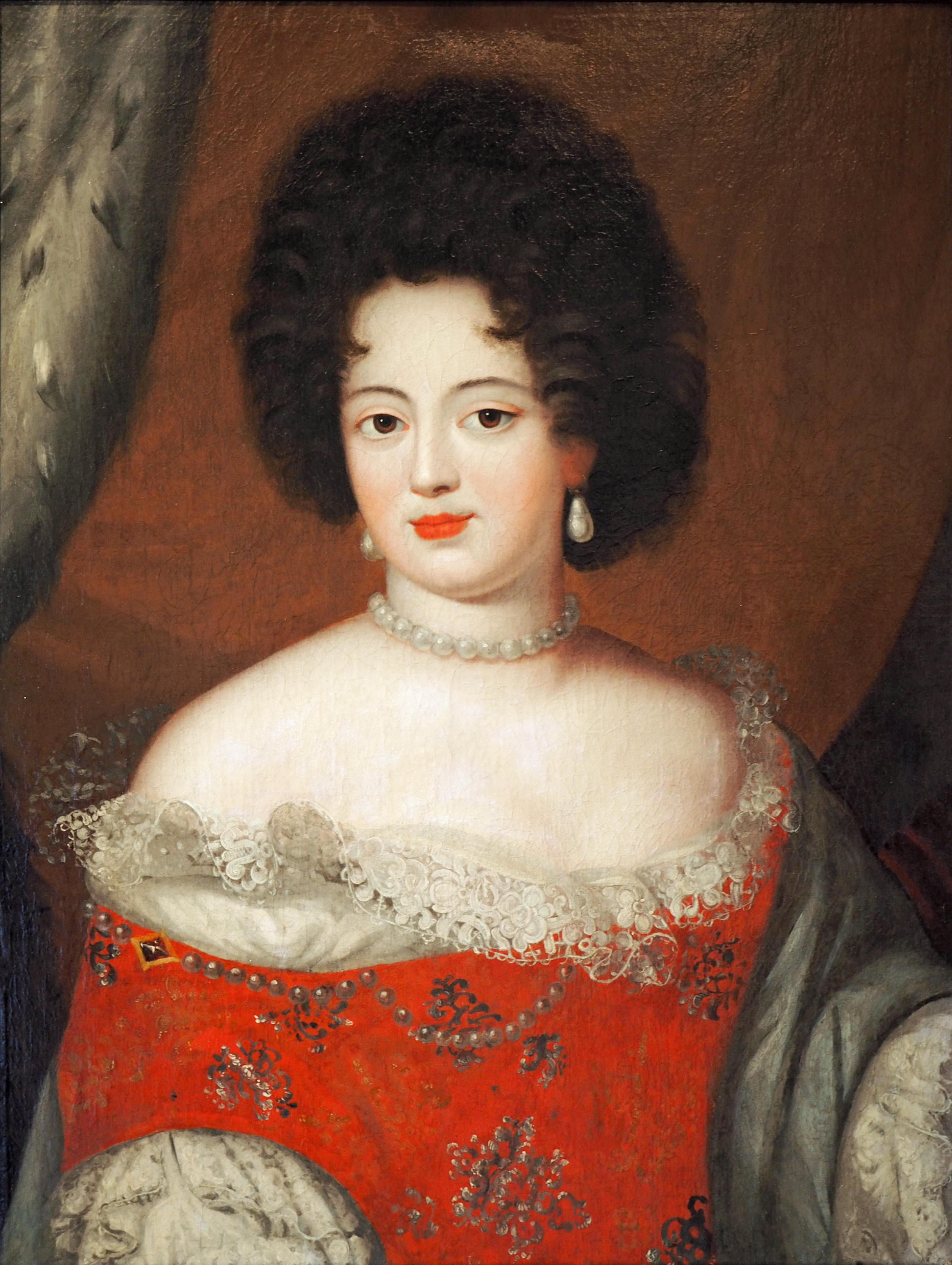
When Sophia Dorothea of Celle married her first cousin, the future King George I, she was an unhappy bride. Filled with dreams of romance and privilege, she hated the groom she called “pig snout” and wept at news of her engagement.

In the austere court of Hanover, the vibrant young princess found herself ignored and unwanted. Bewildered by dusty protocol and regarded as a necessary evil by her husband, Sophia Dorothea grew lonely as he gallivanted with his mistress under her nose.

When Sophia Dorothea plunged headlong into a passionate and dangerous affair with Count Phillip Christoph von Königsmarck, the stage was set for disaster. This dashing soldier was as celebrated for his looks as his bravery, and when he and Sophia Dorothea fell in love, they were dicing with death. Watched by a scheming and manipulative countess who had ambitions of her own, it was only a matter of time before scandal gripped the House of Hanover and tore the marriage of the heir to the British throne and his unhappy wife apart.

Divorced and disgraced, Sophia Dorothea was locked away in a gilded cage for 30 years, whilst her lover faced an even darker fate.


Tuesday, 25 February 2020

The Imprisoned Princess: Out Now


My new book, The Imprisoned Princess, is available to buy now. I'm so delighted to have written the biography of this remarkable woman!

When Sophia Dorothea of Celle married her first cousin, the future King George I, she was an unhappy bride. Filled with dreams of romance and privilege, she hated the groom she called “pig snout” and wept at news of her engagement.

In the austere court of Hanover, the vibrant young princess found herself ignored and unwanted. Bewildered by dusty protocol and regarded as a necessary evil by her husband, Sophia Dorothea grew lonely as he gallivanted with his mistress under her nose.

When Sophia Dorothea plunged headlong into a passionate and dangerous affair with Count Phillip Christoph von Königsmarck, the stage was set for disaster. This dashing soldier was as celebrated for his looks as his bravery, and when he and Sophia Dorothea fell in love, they were dicing with death. Watched by a scheming and manipulative countess who had ambitions of her own, it was only a matter of time before scandal gripped the House of Hanover and tore the marriage of the heir to the British throne and his unhappy wife apart.

Divorced and disgraced, Sophia Dorothea was locked away in a gilded cage for 30 years, whilst her lover faced an even darker fate.


Buy it now:

Pen and Sword
Amazon

Wednesday, 30 October 2013

Cynicism and Success: Frederick I of Württemberg

Frederick I William Charles of Württemberg (Friedrich I Wilhelm Karl von Württemberg; Treptow an der Rega, Poland, 6th November 1754 – Stuttgart, Germany, 30th October 1816)


Frederick I of Württemberg by Johann Baptist Seele
Not so long ago we met Charlotte, Princess Royal, and briefly encountered her husband, Frederick I of Württemberg. A few salon visitors sent me a missive to ask about Frederick so I thought now was the time to reinforce the chaise longue and meet the last Duke of Württemberg, the man whom Napoleon elevated to king. Noted for his enormous bulk, Frederick stood at 6'11" with a weight of approximately 440lbs, so he was certainly not an easy man to miss!

Long before he became the giant of his portraits, Frederick was born the son of Frederick II Eugene, Duke of Württemberg, and Sophia Dorothea of Brandenburg-Schwedt. He was nephew to the ruler of Württemberg, Charles Eugene, and since Charles had no heir, Frederick was prepared from childhood to rule the Duchy. The marriage of Frederick's sister, Sophie Dorothea, and Tsesarevich Paul of Russia strengthened ties between Württemberg and Russia and Empress Catherine II appointed Frederick as Governor-General of Eastern Finland, a valuable grounding for his future role.


Frederick I of Württemberg by Georg Friedrich Erhardt
Frederick I of Württemberg by Georg Friedrich Erhardt 

At the age of 25, Frederick married Duchess Augusta of Brunswick-Wolfenbüttel. Though the couple had four children their marriage was deeply troubled and during a visit to Russia in 1786, Augusta fled from her husband, requesting sanctuary from the Empress. Amid allegations of domestic abuse and rumours that her husband indulged in affairs with young gentlemen at court, Augusta's request for protection was granted by the Empress and Frederick was told to leave Russia. Within two years Augusta would be dead and it was almost a decade before Frederick remarried, taking as his second wife Charlotte, Princess Royal.

In 1797 Frederick became Duke of Württemberg, a role he enjoyed until 1800 when the French army marched in the Duchy and Frederick and Charlotte escaped to Vienna, where they began territorial negotiation with the Duke eventually awarded the title of Elector of Württemberg. Although he and Napoleon were far from fond of one another, Frederick recognised that the Emperor would be a valuable ally and supplied him with troops in return for territory and the title of King of Württemberg, his coronation taking place on 1 January 1806. To further ensure the commitment of both sides, Frederik's daughter married Napoleon's son and the newly-crowned king became a valuable asset to the French, able to broker negotiations with his father-in-law, George III, and an assortment of European leaders.


Frederick I of Württemberg

Mindful of the way the wind was blowing as the years rolled on, in 1813 Frederick abandoned his alliance with Napoleon and joined the allies. At the Congress of Vienna he was confirmed as king and allowed to keep the territories he had gained throughout his years as Napoleon's ally despite the fact that he was far from a popular ruler in many of these lands. His position secure, he remained on the throne until his death the following year, a cynical and successful leader to the end.

Life in the Georgian Court, true tales of 18th century royalty, is available at the links below.

Pen and Sword
Amazon UK
Amazon US
Book Depository (free worldwide shipping)

Saturday, 31 December 2022

Past Matters Podcast

I’m thrilled to be a guest on Past Matters Podcast, telling the story of Sophia Dorothea, the wife whom George I locked away for 30 years... click below to listen to a tale of intrigue, murder and weird predictions! 

Listen now

Wednesday, 3 June 2020

George I: Murder, Marriage and Mayhem

I'm delighted to be visiting my esteemed publisher, Pen & Sword, to tell the story of the disastrous marriage of George I and Sophia Dorothea of Celle. When a loveless marriage erupted into violence and adultery, the stage was set for a scandal that sent the woman who could've been queen of England into captivity for thirty long years.

Click here

Saturday, 18 January 2014

The Hot-Tempered Anna Pavlovna of Russia

Anna Pavlovna of Russia (Saint Petersburg, Russia, 18th January 1795 - The Hague, The Netherlands, 1st March 1865)


Queen Anna of the Netherlands, née Grand Duchess Anna Pavlovna of Russia by Nicaise de Keyser, 1849
Anna Pavlovna of Russia by Nicaise de Keyser, 1849

Today we meet a lady to be reckoned with; a lover of pomp and ceremony, philanthropist and eventual queen, Anna Pavlovna lived a life that could never be called dull.

Her Imperial Highness Grand Duchess Anna Pavlovna was born into immense privilege as the daughter of Paul I of Russia and Empress Maria Feodorovna (formerly Sophie Dorothea of Württemberg). With her younger brothers, Nicholas and Michael, she was raised in seclusion by her mother at Tsarskoye Selo, where the youngsters enjoyed a varied and rich education.

A noted beauty and the very model of a good dynastic match, 14 year old Anna attracted the attention of Napoleon who requested her hand in marriage. The Empress was determined that the Corsican would not marry into the Romanov dynasty and delayed her reply until Napoleon's interest faded and he turned his attentions, successfully this time, to Austrian Archduchess Marie Luise. She caught the eye of another noble gentleman in the shape of Charles Ferdinand, Duke of Berry, son of the future Charles X but when it became apparent that Anna would have to convert to Catholicism, the marriage did not occur.


L to r, William (future William III) , Alexander, Willem II, Anna Pavlovna, Sophie and Hendrik by Jean-Baptiste Van der Hulst, 1832

In fact, Anna's marital destiny lay elsewhere and when the Congress of Vienna in 1815 resulted in an alliance between Russia and the Netherlands, Anna's brother, Tsar Alexander I, suggested that she might marry William of Orange, later to become King William II of the Netherlands. William and Anna were introduced in Russia and the young lady consented to the engagement, with a lavish wedding ceremony sealing the union on 21st February 1816 at the Winter Palace in St Petersburg. The festivities continued for almost a fortnight and when they were concluded, the newlyweds remained in Russia for many months before finally travelling on.

After a stopover in Berlin, the couples finally arrived in the Netherlands in summer 1816, where Anna was to experience something of a culture shock as she adjusted to the far less strict pace of the Brussels court and society in general. However, Anna came to enjoy life in Brussels and was sad to leave in 1830 when the Belgian revolution sent the court fleeing for the north. However, in her new surroundings she flourished, founding a school for poor girls and hospitals for wounded servicemen, as well as dozens of orphanages.

The life of Anna and William was anything but settled and she always considered herself to have married beneath her own standing, even going so far as to accuse her husband of stealing from her to settle gambling debts. A serial adulterer with both men and women, Anna eventually separated from her husband yet the couple did have five children, four of whom survived into adulthood and Anna was a devoted mother, encouraging their education and interests. Despite their estrangement, Anna continued to advise her husband and was happy to act as an intermediary between William and his father, William I, with whom he had a fractious relationship.


Anna Pavlovna photographed in 1855
Anna Pavlovna of Russia photographed in 1855

Despite their separation, William and Anna became King and Queen of the Netherlands on 7th October 1840 when William I abdicated, yet she was not exactly popular from the start. Hot-tempered and seen as elitist, Anna encouraged pomp and ceremony at court and lamented that she could not have remained in Russia, where she often visited. On the death of her husband in 1849, Anna was bereft and found it hard to come to terms with the loss of her official standing. She suffered financial difficulties as queen dowager and lived in quiet seclusion, constantly clashing with her son, King William III, and her daughter-in-law. 

Anna Pavlovna died of complications from a chest infection on the afternoon of 1st March 1865; following her death, she was memorialised in a traditional and lavish Russian Orthodox service of which she would surely have approved.

Life in the Georgian Court, true tales of 18th century royalty, is available at the links below.
Pen and Sword
Amazon UK
Amazon US
Book Depository (free worldwide shipping)

Tuesday, 13 August 2013

"Free from vanity and pomp": Queen Adelaide

Adelaide of Saxe-Meiningen (Adelaide Amelia Louise Theresa Caroline, Meiningen, Thuringia, Germany, 13th August 1792 – Bentley Priory, Middlesex, England, 2nd December 1849) 


Portrait of Queen Adelaide by William Beechey, 1831
Queen Adelaide by William Beechey, 1831

After yesterday's flamboyant festivities with George IV, we're celebrating another royal birthday today. It's not quite as wild a party though, as Queen Adelaide was a little bit more subdued than Prinny.

Born in Germany as the daughter of George I, Duke of Saxe-Meiningen and Princess Luise Eleonore of Hohenlohe-Langenburg, Adelaide grew up in the highly democratic state of Saxe-Meiningen, which covered less than 500 square miles. An intelligent and charming young lady with a deep religious faith, Adelaide shunned the glamour of society in favour of a more homely life. However, she would one day travel far beyond her native land, eventually finding herself on the throne of England.

George IV was very fond of theatricals and his brother, Prince William, Duke of Clarence, was no different. Though unmarried, his liaison with actress Dorothea Jordan had produced a number of illegitimate children, but no legal heirs. He cast his regal eye over the likely candidates for marriage and, spurred on by the promise of a fat parliamentary payout in return for a respectable bride, eventually settled on Adelaide. She was a little way down his list of preferential candidates and almost three decades his junior, but the match was made.

Adelaide travelled to England in summer 1818 and met her husband-to-be at Grillon's Hotel in Bond Street on 4th July. A week later she and William were married in a double wedding at Kew Palace alongside Prince Edward, Duke of Kent, and Victoria, Dowager Princess of Leiningen.


Portrait of William IV by Sir Martin Archer Shee, 1833
William IV by Sir Martin Archer Shee, 1833

The ingredients were all in place to create a recipe for disaster: an arranged marriage, a huge age difference and a marriage to secure a throne and financial settlement. However, against all odds William and Adelaide were to become a happy couple. Whilst George was drowning in debt in England the newlyweds made their home in the far more affordable Hanover and lived a quiet life, with Adelaide by all accounts improving her husband's temper and curing a number of bad habits! 

The couple were overjoyed when Adelaide fell pregnant in 1818 yet their happiness was to turn to tragedy when the baby, Charlotte, was born prematurely, dying just a few hours later. A second miscarriage followed in 1819 and in 1820, the couple's four month old daughter, Elizabeth, died after complications from bowel disease. Further tragedy followed in 1822 when Adelaide delivered stillborn twin boys and though rumours persisted of pregnancies, there were to be no further children. Despite a bitter feud with her mother, the Duchess of Kent, both William and Adelaide were devoted to their niece, Princess Victoria of Kent (later Queen Victoria) and the young girl was fond of her aunt and uncle in return and would remain so throughout her life.

By the time of George's death in 1830, William and Adelaide had returned to England and were happily ensconced at Bushy House. Unlike the vitriolic scenes at Westminster Abbey when Caroline of Brunswick tried to be crowned alongside George, William and Adelaide attended the coronation together. Whilst William played the buffoon throughout the ceremony on 8th September 1831, his devoted wife behaved with utmost dignity and won the respect and admiration of all present.


Portrait of Queen Adelaide by Sir Martin Archer Shee, 1836
Queen Adelaide by Sir Martin Archer Shee, 1836

After the profligacy and scandal of George's reign, Adelaide and William were popular monarchs, representing a return to the less extravagant style of George III and Queen Charlotte. Adelaide performed a number of charitable deeds and donated large sums of money to further her charitable interests. Although apparently not interested in political manoeuvring, rumours were rife that the Queen heavily influenced her husband's decisions in favour of her own Tory opinions. 

In 1837 the King fell gravely ill and his wife nursed him for nearly two weeks at Windsor Castle, remaining constantly by his side until he died on 20 June. The Queen Dowager remained beloved of the public through the remaining years of her life, and after her death was buried with her husband at Windsor according to her own wishes, "free from the vanities and pomp of this world.".


Life in the Georgian Court, true tales of 18th century royalty, is available at the links below.


Pen and Sword
Amazon UK
Amazon US
Book Depository (free worldwide shipping)

Monday, 30 October 2017

Queens of Georgian Britain


Queens of Georgian Britain is released today in the UK and I don't think I could be happier!

Huge thanks to all my friends, readers and those who have encouraged, cajoled and knocked me along. You're all marvellous!

Queens of Georgian Britain

Once upon a time there were four kings called George who, thanks to a quirk of fate, ruled Great Britain for over a century. Hailing from Germany, these occasionally mad, bad and infamous sovereigns presided over a land in turmoil. Yet what of the remarkable women who were crowned alongside them?

From the forgotten princess locked in a tower to an illustrious regent, a devoted consort and a notorious party girl, the queens of Georgian Britain lived lives of scandal, romance and turbulent drama. Whether dipping into politics or carousing on the shores of Italy, Caroline of Ansbach, Charlotte of Mecklenburg-Strelitz and Caroline of Brunswick refused to fade into the background.

Queens of Georgian Britain offers a chance to step back in time and meet the women who ruled alongside the Georgian monarchs, not forgetting Sophia Dorothea of Celle, the passionate princess who never made it as far as the throne. From lonely childhoods to glittering palaces, via family feuds, smallpox, strapping soldiers and plenty of scheming, these are the queens who shaped an era.

Queens of Georgian Britain is available now!


Book Depository (free worldwide shipping)

Monday, 21 April 2014

The Ill-Fated Archduchess Elisabeth of Austria

Duchess Elisabeth of Württemberg (Elisabeth Wilhelmine Luise; Treptow, Brandenburg, Germany, 21st April 1767 - Vienna, Austria, 18th February 1790)


Elisabeth of Württemberg by Johann Baptist von Lampi the Elder, 1785
Duchess Elisabeth of Württemberg by Johann Baptist von Lampi the Elder, 1785

Our guest today is, perhaps, a lesser known member of European nobility. Despite a long-planned and illustrious political marriage, Elisabeth was fated to live a short life. Although she was to become a favourite of an ailing Emperor and married an Emperor-in-waiting, her ill health ensured that she was never to see her own husband assume the throne of the Holy Roman Empire.

Elisabeth was one of a dozen offspring born to Frederick II Eugene, Duke of Württemberg,  and his wife, Sophia Dorothea of Brandenburg-Schwedt. Like so many children of her class, it was intended from the start that she would make an expedient political marriage and negotiations swiftly began to secure her a fiancé. The groom-to-be was eventually named as Francis, nephew of Holy Roman Emperor Joseph II and the man who would one day hold that title himself.


Elisabeth of Württemberg by Johann Baptist von Lampi the Elder
Duchess Elisabeth of Württemberg by Johann Baptist von Lampi the Elder

When Elisabeth was 15 she travelled from Brandenburg to Vienna and took up resident with the sisters of the Salesianerinnenkloster. In her new home she converted to Catholicism in preparation for her marriage and completed her education. Here she remained until 1788 when, on 6th January, she married the twenty year old Francis. As the couple settled into life together the new Archduchess swiftly became a favourite of her new husband's uncle, Emperor Joseph II, who had brokered the marriage to his nephew. He found her charming and refreshing company and she came to view Joseph in a grandfatherly light, spending long hours in his company. Her affection was of great comfort to the Emperor; his health was falling and he had faced a series of high profile political failures that left him disillusioned and unhappy.


Francis I by Leopold Kupelwieser, 1805

In late 1789 Elisabeth fell pregnant and her condition was to have a huge impact on her health. The cheerful, charming young lady grew weaker by the day and after she attended the Emperor's Anointing of the Sick on 15th February 1790, Elisabeth passed out and was rushed to her chambers. Two days later she went into labour and suffered for a day and night before she gave birth to the extremely premature Archduchess Ludovika Elisabeth on 18th February. Although the little girl would survive for 16 months, Elisabeth passed away within hours of delivering her daughter and just two days later, her beloved uncle-in-law also lay dead.

The ill-fated Archduchess was interred in the Imperial Crypt in Vienna; her infant daughter and the deceased Emperor were laid to rest in the same crypt.

Life in the Georgian Court, true tales of 18th century royalty, is available at the links below.
Pen and Sword
Amazon UK
Amazon US
Book Depository (free worldwide shipping)

Saturday, 9 August 2014

Augustus William: The Prince Who Died of a Broken Heart

Prince Augustus William of Prussia (Berlin, Prussia, 9th August 1722 - Oranienburg, Prussia, 12th June 1758)


Augustus William of Prussia by G von Bern
As a lass, I was fascinated by the very concept of Prussia. Something about the word itself seemed impossibly exotic, a land of mystery and, for some reason, snow everywhere. I can't vouch for snow and exoticism but we are in Prussia today to meet Augustus William, a prince of the House of Hohenzollern.

As son of Frederick William I of Prussia and Sophia Dorothea of Hanover, Augustus could count amongst his siblings our old friend and seasoned schemer, Louise Ulrika, and Frederick the Great.

Unlike his sister, Augustus did not hanker after absolutist power and was content to live a life away from the throne. Aged twenty, he married Luise of Brunswick-Wolfenbüttel, the sister of Frederick the Great's wife, and the couple were parents to four children, all but one of whom survived to adulthood. In fact, though Augustus never ruled in his own right, when his brother died leaving no heirs, Augustus' son came to the throne as Frederick William II of Prussia. 

Augustus won the ire of Frederick thanks to a disastrous showing at the Battle of Kolin during the Seven Years War, at which Augustus unwisely chose to retreat. The furious Frederick suffered his first defeat in this battle and he and his brother never fully reconciled. In fact, when Augustus died twelve months later of a brain tumour the rumour spread that the unhappy prince had actually died of a broken heart.

Life in the Georgian Court, true tales of 18th century royalty, is available at the links below.

Pen and Sword
Amazon UK
Amazon US
Book Depository (free worldwide shipping)

Sunday, 16 February 2014

From Tomboy to Tiaras: Grand Duchess Maria Pavlovna of Russia

Grand Duchess Maria Pavlovna of Russia (Saint Petersburg, Empire of all the Russias, 16th February 1786 – Weimar, Germany, 23rd June 1859)


Grand Duchess Maria Pavlovna of Russia by George Dawe, 1825
Grand Duchess Maria Pavlovna of Russia vy George Dawe, 1825

Today's noble visitor , Maria Pavlovna, was the daughter of Paul I of Russia and his wife, Maria Feodorovna (born Sophie Dorothea of Württemberg). Born into an illustrious dynasty, she could count two Tsars of Russia among her siblings as well as a previous guest at the salon, Anna Pavlovna of Russia.

As a little girl Maria was known for her tomboyish ways, liking nothing more than joining the boys in their games rather than favouring ladylike pursuits. A childhood brush with smallpox resulted in the young girl's face becoming scarred yet she did not allow this to hold back and devoted herself to the study of music under Kapellmeister Giuseppe Sarti  and Ludwig-Wilhelm Tepper de Ferguson, proving herself an exemplary pianist. 


Grand Duchess Maria Pavlovna of Russia by Vladimir Borovikovsky
Grand Duchess Maria Pavlovna of Russia by Vladimir Borovikovsky 

Intelligent and inquisitive, she gave her consent to her betrothal to Charles Friedrich  Hereditary Grand Duke of Saxe-Weimar-Eisenach in at the age of 18 and the couple were introduced in St Petersburg. they spent time getting to know one another and were married on 3rd August. The newlyweds remained in Russia for a year settling into life together and over their long marriage had had four children, three of whom lived to adulthood.

On her much-celebrated arrival in Saxe-Weimar-Eisenach, Maria was shocked at the poor state of her new homeland and devoted herself to culture and philanthropy, putting in place a programme of social welfare and hosting celebrated literary and scientific salons. The people and court took a liking to the new arrival and she threw herself wholeheartedly into philanthropic and cultural activities, beginning a lifelong interest in the welfare of the people of her nation.


Charles Friedrich, Grand Duke of Saxe-Weimar-Eisenach
Charles Friedrich, Grand Duke of Saxe-Weimar-Eisenach

In 1806 Maria was forced to leave Weimar as Napoleon advanced and they fled to Bohemia, where they remained until the Battle of Leipzig. Finally able to return to their territory, the Duke and Duchess participated in the Congress of Vienna and enjoyed significant gains thanks in part to Maria's negotiating skills. In 1828 the death of Grand Duke Carl August saw Maria and her husband finally attain the rank of Grand Duchess and Grand Duke, their court one that celebrated cultural achievement in Weimar.

A devoted mother and wife, Maria retired from public life when she became a widow in 1853 and expressed a wish to be buried beside her late husband at her own death, yet somehow still rest on Russian soil. She returned to her homeland just once in her later years, to attend the 1855 coronation of her nephew, Alexander II of Russia.


Grand Duchess Maria Pavlovna of Russia

Following her death she was buried in the Goethe-Schiller Mausoleum beside the Grand Duke. In accordance with her wishes, the casket was lined with earth brought from Russia and the Grand Duchess was mourned deeply by those who had known her.


Life in the Georgian Court, true tales of 18th century royalty, is available at the links below.

Pen and Sword
Amazon UK
Amazon US
Book Depository (free worldwide shipping)

Tuesday, 4 October 2016

The Time In Between: the Era of William IV

It's my pleasure to welcome Caroline Warfield to the salon to discuss William IV!


---oOo---

What do you call the era of William IV, sandwiched as it is between the Georgian and the Victorian? It may be short, but it can't be dismissed. William warrants attention in his own right.

A note about eras: the Covent Garden Gilflurt's Guide to Life covers all things Georgian, that long and glorious era of the four Georges, a time of social and economic change and literary flowering. Its extent is almost always defined as beginning with the accession of George I in 1714 to the death of George IV in 1830. (That ubiquitous period, the Regency, is a subset of Georgian and refers, of course. to the period in which the future George IV served as regent for his father, George III.) The Victorian Era began when Victoria came to the throne June 20, 1837 and lasted for over sixty years until her death in 1901. 

That leads to my question, what do you call the years 1830 to 1837? Occasionally, but not often, those years are lumped into the Georgian. That may be because William was the brother of one George and the son of another, or because his reign is too short to bother naming. In writing two novels set in that stretch of time, I've come to think of it as the Time In Between. It belongs to William alone.

When William was born in the Queen's House (later Buckingham Palace) in 1765 he was considered, as a third son, an unlikely candidate to accede to the throne. He entered the navy at aged thirteen and soon after served in New York during the American Revolution, just escaping a plot to kidnap him. He is generally considered to have been a good and well-respected officer, numbering Nelson among his friends. He left the navy in 1790, however, and, when he sought a command during the Napoleonic Wars, he was denied one.

After being made Duke of Clarence, he lived for twenty years in a domestic arrangement with the actress Dorothea Bland, "Mrs. Jordan," with whom he had ten children, all given the surname Fitzclarence. By all accounts it was a happy household, but the relationship came to an end when William sought a rich wife as a way out of financial difficulties. Wealthy fathers kept a tight hold on their daughters, however, and William was only successful after the death of Princess Charlotte when he became heir apparent.

Unlike his older brothers, William appears to have been a domestic soul. His marriage to Princess Adelaide of Saxe-Meiningen, while an arranged one, was reputed to be as happy as his long arrangement with Mrs. Jordan. Adelaide was kind and welcoming to the Fitzclarence children, all of who came into William's custody after the death of their mother. Unfortunately, none of his legitimate children survived infancy, leaving the daughter of his younger brother, Victoria, as his heir.

As king, William has been described as unassuming and disinterested in pomp, and as hard working and conscientious. He had to be persuaded to have a coronation ceremony and, even then, put the event on tight budget in deliberate contrast to George IV. The Duke of Wellington claimed to have gotten more done with William in ten minutes than he had with George IV in ten days. William, who had generally supported the Whigs as a young man, tilted toward conservative as king. He supported the Duke of Wellington and the Tories but they lost control soon after William took the throne.

The loss pushed the country toward the Reform Crisis. Lord Grey, Wellington's Whig successor, introduced the Reform act, which sought to reform the electoral system. It eliminated "rotten boroughs" (those with few voters and multiple MPs controlled by peers); broadened voting rights to include shopkeepers, small landowners and tenant farmers; created new constituencies; and almost doubled the electorate. The bill passed only after much struggle in Parliament and riots in the streets. Grey prevailed upon William to create sufficient new peers to ensure passage in Lords. He agreed reluctantly, but Lords caved in and passed the bill. Because the act had no impact on the poor and the working class, many thought it didn't go far enough. Widespread dissatisfaction ultimately led to Lord Grey's resignation. William's early popularity never recovered.

William's politics were complicated. He supported Catholic emancipation but opposed the abolition of slavery. He distrusted foreign governments, particularly the French, yet sought to improve Anglo-American relations. 

In addition to the first reform act, other events during William's reign include:
  • Slavery was abolished throughout the British Empire
  • The Factory Act of 1833 prohibited the employment of children less than nine and reducing the hours of women and older children.
  • The New Poor Law of 1835 passed.
  • The Tolpuddle Martyrs, a group of Dorset agricultural laborers, were transported to Australia for taking a secret oath to form a trade union. It sparked a massive nationwide protest.
  • Fire destroyed the Palace of Westminster and a new London Bridge opened.
  • Laws passed requiring the registration of births, deaths and marriages.
  • The last person in England to stand in a pillory did so, the first policeman killed in the line of duty died, and the last two men to suffer capital punishment for homosexual acts were hanged.
  • Charles Darwin embarked on and returned from the voyage of the HMS Beagle with the notes from the Galapagos Islands that would like to his work the Origin of the Species.
  • Ross led an expedition to the magnetic North Pole.
  • Michael Faraday demonstrated electromagnetic induction and constructed the first dynamo.
  • Charles Dickens earliest writings, including Oliver Twist, which shed light on the plight of the poor, were published. 
  • Sir Walter Scott died.
  • Alfred Tennyson's Lady of Shallot was published.
  • Harrods was founded. 
  • The East India Company lost its China monopoly.
  • The Rideau Canal, a Unesco World Heritage site, connecting Kingston in Upper Canada to Montreal in Lower Canada was completed.

The Time In Between isn't an era that can be brushed aside. William lived long enough to see his niece Victoria reach her majority, and thus out of her mother's control, as he had hoped, but only by a few weeks. He died June 20, 1837, and so began the Victorian Era.

For more information see

"The Reform Act of  1832," British Library: Learning, http://www.bl.uk/learning/histcitizen/21cc/struggle/chartists1/historicalsources/source2/reformact.html

"King William IV (1765-1837)," BBC: History, http://www.bbc.co.uk/history/historic_figures/william_iv.shtml

"William IV," Spartacus Educational:  British History>The Monarchy, http://spartacus-educational.com/PRwilliamIV.htm, 

"The Reform Act of 1832," UK Parliament official website, http://www.parliament.uk/about/living-heritage/evolutionofparliament/houseofcommons/reformacts/overview/reformact1832/

_________________________________________________________________
My interest in "The TIme In Between" comes from researching the first books in my new series, Children of Empire. The first in that series, The Renegade Wife begins in Upper Canada in 1832. The second, The Reluctant Wife (due April 2017) begins in India in 1835. 

About The Renegade Wife
Betrayed by his cousin and the woman he loved, Rand Wheatly fled England, his dreams of a loving family shattered. He clings to his solitude in an isolated cabin in Upper Canada. Returning from a business trip to find a widow and two children squatting in his house, he flies into a rage. He wants her gone, but her children are sick and injured, and his heart is not as hard as he likes to pretend.

Meggy Blair harbors a secret, and she’ll do whatever it takes to keep her children safe. She’d hopes to hide with her Ojibwa grandmother, if she can find the woman and her people. She doesn't expect to find shelter with a quiet, solitary man, a man who lowers his defensive walls enough to let Meggy and her children in.

Their idyllic interlude is shattered when Meggy’s brutal husband appears to claim his children. She isn’t a widow, but a wife, a woman who betrayed the man she was supposed to love, just as Rand’s sweetheart betrayed him. He soon discovers why Meggy is on the run, but time is running out. To save them all, Rand must return and face his demons. He follows her to Portsmouth and Bristol, still reeling from the Reform Crisis riots.

Available now for pre-order
https://www.amazon.com/Renegade-Wife-Children-Empire-Book-ebook/dp/B01LY7IRT6/

About the Author

Traveler, would-be adventurer, librarian, technology manager—Caroline Warfield has been many things, but above all a romantic. She is now a writer of historical romance, enamored of owls, books, history, and beautiful gardens, who sits in an office surrounded by windows and lets her characters lead her to adventures in England and the far flung corners of the British Empire. She nudges them to explore the riskiest territory of all, the human heart.


 Find her at 
Amazon Author              
Good Reads                     


Written content of this post copyright © Caroline Warfield, 2016.